
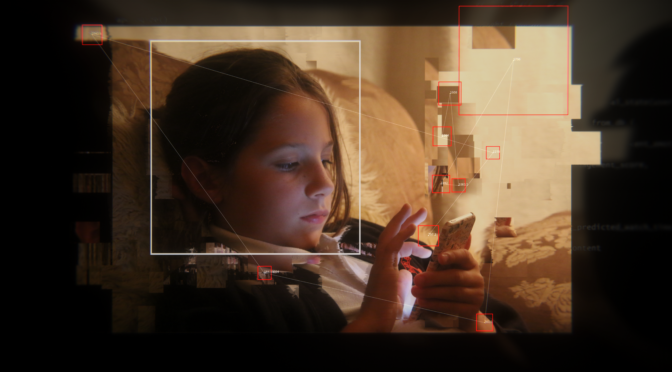
 The conversation around teens and social media is forever volatile, with reason and facts often overshadowed by feelings, fears, and moral – even mortal – panics. In such an environment it can be difficult to find truth and rationality, muddling rather than clarifying any productive path forward. Marc Silver’s documentary MOLLY VS THE MACHINES takes an incredibly heavy and emotive subject and, while paying tribute to the human tragedy that inspired it, examines the social, legal, and material conditions that engendered it. The result does not wallow in exploitation or suggest hard-and-fast ways forward, but instead exposes the safeguarding cracks and legal loopholes that have caused so much harm in online spaces.
The eponymous Molly is Molly Russell who took her life aged 14 seemingly out of the blue. Her family suspect that her social media use and the lack of filters around content encouraging self-harm, notably on the Meta-owned Instagram, contributed to this: her friends corroborate her changed dress and demeanour at school in her final months. Proving this – and finding ways to protect young minds of the future – is far from a straightforward quest.
MOLLY VS THE MACHINES recreates the inquest into her death with actors and also includes the words of Big Tech whistleblowers alongside Molly’s real family and friends appearing on screen. At the start of the documentary, text on screen notes that AI has been used to generate text demonstrating how such technology responds to a range of prompts and leading questions, a useful indicator of its soullessness when confronted with complex, immense human emotions. This AI usage has proven controversial in reviews, especially considering the documentary’s subject matter; while this reviewer is extraordinarily anti-AI in all of its generative forms for environmental and ethical reasons, its labelled use to demonstrate the technology’s limitations and training to fawn rather than challenge or inform is arguably useful. (It is unclear if the imagined footage of a ghostly Molly in her bedroom is AI or human animation; using AI in this case would be more troubling.)
The case dates from 2017, and in the almost decade since, the internet has taken on new, terrifying dimensions of deepfakes, generative AI tools, and trends and challenges damaging health and happiness. In this way, MOLLY VS THE MACHINES feels somewhat dated before it is released: the social media landscape has evolved so much that the Pinterest images Molly viewed feel almost quaint.
In the end, MOLLY VS THE MACHINES does veer towards censorship and restricted access for teens – a perhaps “boomer” take on the issue. The more sustainable answer would be holding tech moguls accountable or developing tools for content management that do not unduly censor marginalised creators but do not rely on the labour of thousands of underpaid workers in the global South to review harrowing content with few safeguards. The Russells and their friends and family testify to Molly’s unique, irreplaceable humanity; perhaps it is all of our responsibility to protect ourselves and our loved ones.