
Director Gore Verbinski’s impact at the box office probably outweighs the cinematic accomplishments of the films themselves. However, if one word were to define where his work has performed best it would be ‘shenanigans’.
PIRATES OF THE CARIBBEAN: THE CURSE OF THE BLACK PEARL spawned a franchise of diminishing returns off the back of Jack Sparrow’s shenanigans. THE LONE RANGER engagingly updated Buster Keaton shenanigans for the 21st-century blockbuster, with the massive budget that proved an anchor around the film’s reputation before its abusive star pairing sank any hope of reassessment. GOOD LUCK, HAVE FUN, DON’T DIE invites, in both tone and theme, comparisons with sharper or more accomplished pieces of media. However, with an irreverent disdain for gravitas and some excellent casting choices, it is nevertheless entertaining whilst also firing some sharp barbs at the voluntary surrendering of our humanity to technology.
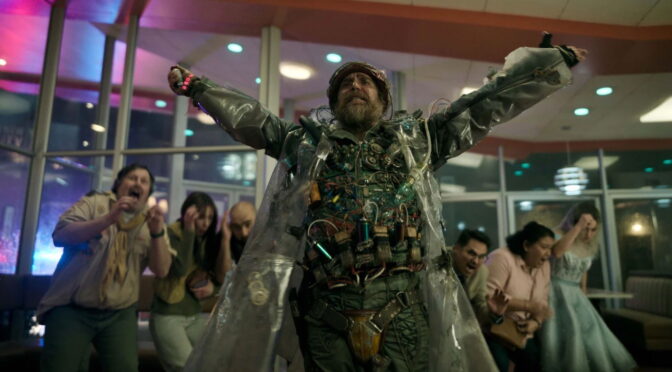
The film opens with Sam Rockwell (whose character is never named) waltzing into a diner, clad in wires, with all manner of gizmos, a transparent rain jacket and a dishevelled and eccentric demeanour. He looks like a garden variety lunatic, but claims to be from the future, undertaking his 117th attempt to recruit the precise combination of the diner’s patrons that will help him avert a post-apocalyptic future. He castigates them for their devotion to technology, social media, and the general brain rot that humanity has willingly embraced.

“GOOD LUCK, HAVE FUN, DON’T DIE [invites] comparisons with sharper or more accomplished pieces of media. However, with an irreverent disdain for gravitas[,] it is nevertheless entertaining…”
The film then uses backstories of the recruits to draw the connecting line between the future Rockwell speaks of (which we only ever see glimpses of) and the present day. A mother, Susan (Juno Temple), experiences a bizarrely blasé response to the loss of her son. A young woman, Ingrid (Haley Lu Richardson), who seems to experience an allergy to wireless technology, gradually starts to see it encroach on her life in alarming ways.
None of this is especially novel. The invasive creep of technology, and even social media specifically, has been examined deeply across many episodes of Black Mirror. The dangers of fully or semi-autonomous technology date back to the earliest science fiction films and literature. A modern understanding of A.I., technology co-dependence, and social media has been covered in successful, accessible multiplex fare like COMPANION and M3GAN. However, two films loom largest when thinking about the aesthetics and style Verbinski brings to GOOD LUCK, HAVE FUN, DON’T DIE.
“Something Verbinski’s film captures adeptly is Rockwell’s ability to slide effortlessly from endearing goofball to threatening loose cannon.”
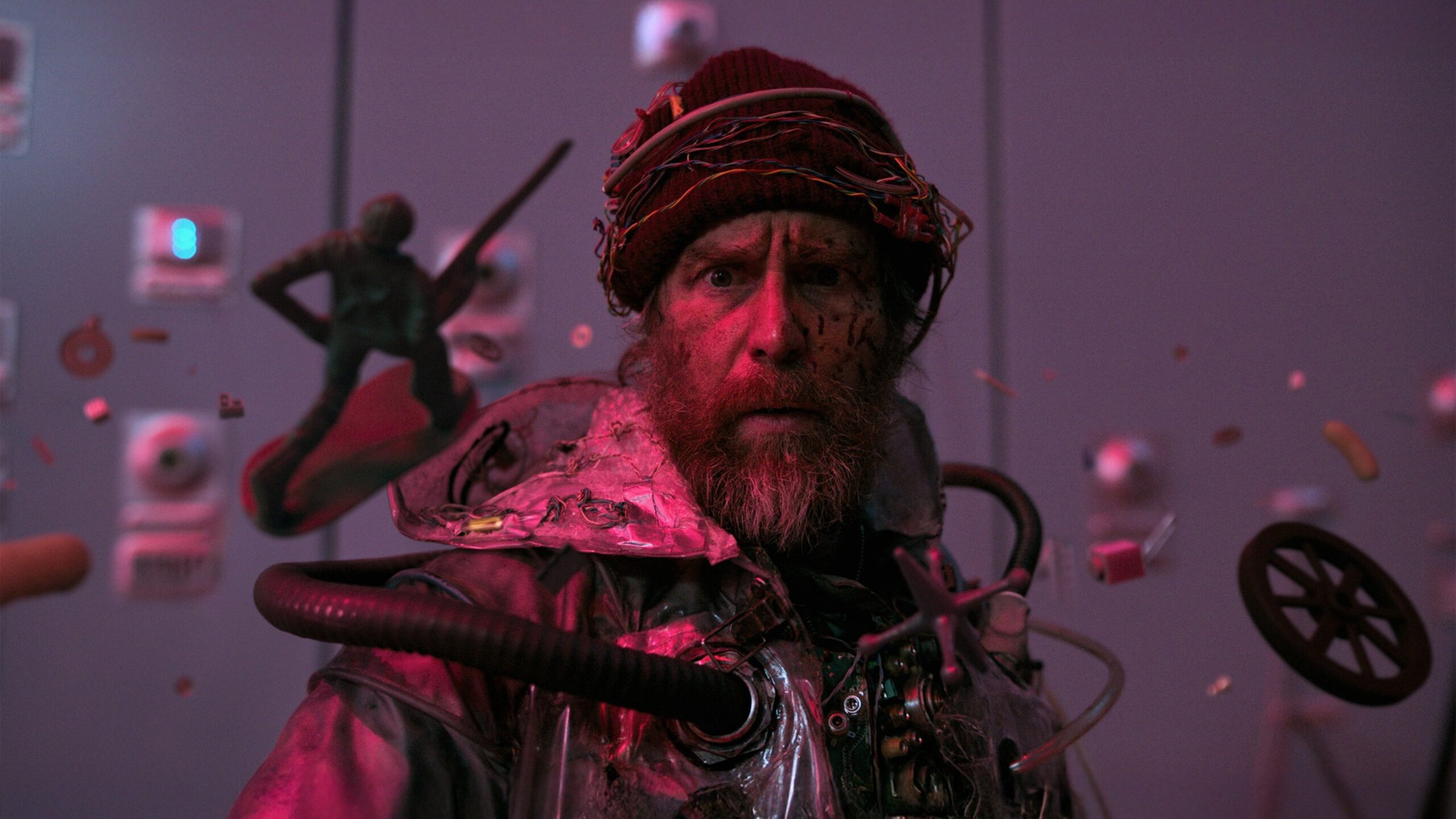
Firstly, in terms of recent impact, EVERYTHING EVERYWHERE ALL AT ONCE lays the blueprint for the film’s style of rapid-fire kooky science fiction. Much like that 2023 Best Picture winner, Verbinski’s film rarely stops to take a breath and leans into visual absurdities and comedic delivery to make its points. The satirical assessment of things like ‘A.I. slop’ and government care for its citizens is a source of ridicule rather than despair. Secondly, the future aesthetics and imminent dystopia share more than a passing hint of 12 MONKEYS. Rockwell’s character – clad in plastic and all manner of technological clutter – looks as if Bruce Willis’s James Cole has been dragged through a hedge backwards.
The result of this melting pot of predecessors is that the film struggles to shape a unique viewpoint from its mélange of influences. The film’s memorability rests on the lead cast, and, fortunately, Rockwell is the perfect choice for this role. He brings the same brand of charismatic weirdo he perfected in films like SEVEN PSYCHOPATHS and the misbegotten adaptation of THE HITCHHIKER’S GUIDE TO THE GALAXY. Something Verbinski’s film captures adeptly is Rockwell’s ability to slide effortlessly from endearing goofball to threatening loose cannon. Both Juno Temple and Haley Lu Richardson deliver performances with emotional weight that contrasts nicely against the film’s hijinks, grounding the zaniness in relatable human emotions and issues a contemporary audience can empathise with.
“The result of this melting pot of predecessors is that the film struggles to shape a unique viewpoint from its mélange of influences.”
That being said, for a script narratively focused on the race to disrupt a powerful artificial intelligence, that amorphous mass of ideas means the film is extremely meandering. As the film moves into its final act, it saps its own energy with a muffled jab at generative A.I. and the ‘brainwashing’ effects of algorithmic social media. The film’s concerns devolve from a sharp critique of humanity’s willing surrender to technology into an aged stream of consciousness moan. The climactic confrontation, in particular, has little connective tissue to the visuals that precede it. Earlier in the film, Verbinski has some visual flourishes, especially when a character’s use of a bulky virtual reality headset blocks rays of daylight in a dusty room. By the time the film concludes it has descended from the tactile disarray of Rockwell’s appearance into intangible CGI gibberish. The visuals are not the A.I. the film rightfully rejects, but it still earns the ‘slop’ tag.
There is more than enough wit and wisdom in the delivery of GOOD LUCK, HAVE FUN, DON’T DIE that it rarely fails to be entertaining. Luckily, fun is indeed had, even if Rockwell’s haphazard quest is not the only thing that feels like it has already had 116 previous iterations.