
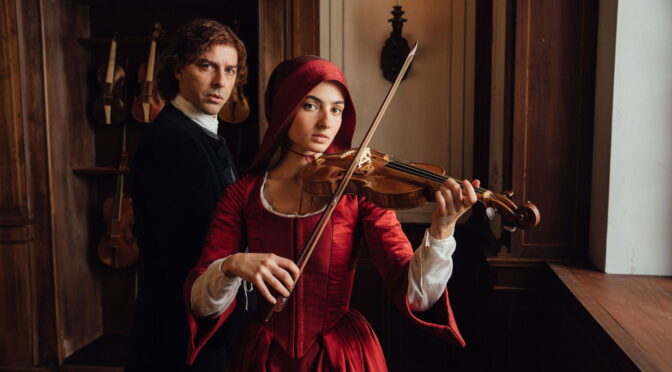
In the unforgiving world of 18th-Century Venice, orphans are commodities marketed on their musical prowess. Put on display for the entertainment of intrigued bourgeoisie, the girls of Ospedale della Pietà serve as little more than items to be wedded off to widowed gentlemen and war heroes in exchange for donations to the institution. Foundling Cecilia discovers an opportunity to escape this oppressive life when her talent gains the attention of the orphanage’s new, impoverished composer – Antonio Vivaldi. Damiano Michieletto’s elegant and accomplished coming-of-age debut presents an exciting new addition to the realm of Italian cinema.
A crowd of awed spectators gathered in a church stare and listen. The sound that reaches their ears inspires a range of high emotions. Some cry, some stand with their mouths agape, and many others simply remain still in deep, focused contemplation. No matter how much the audience stares above, however, they can never see the source of the angelic tones. The feelings of ecstasy must be sourced from their imaginations. The concept of spectatorship – and the comparative powerlessness of those being watched, whether visible or not – is a dynamic established early on in Michieletto’s debut. This group of girls from Ospedale della Pietà are trained from birth under a strict regime to perform their musical arts in the hopes of attracting the attention of wealthy patrons searching for a bride.
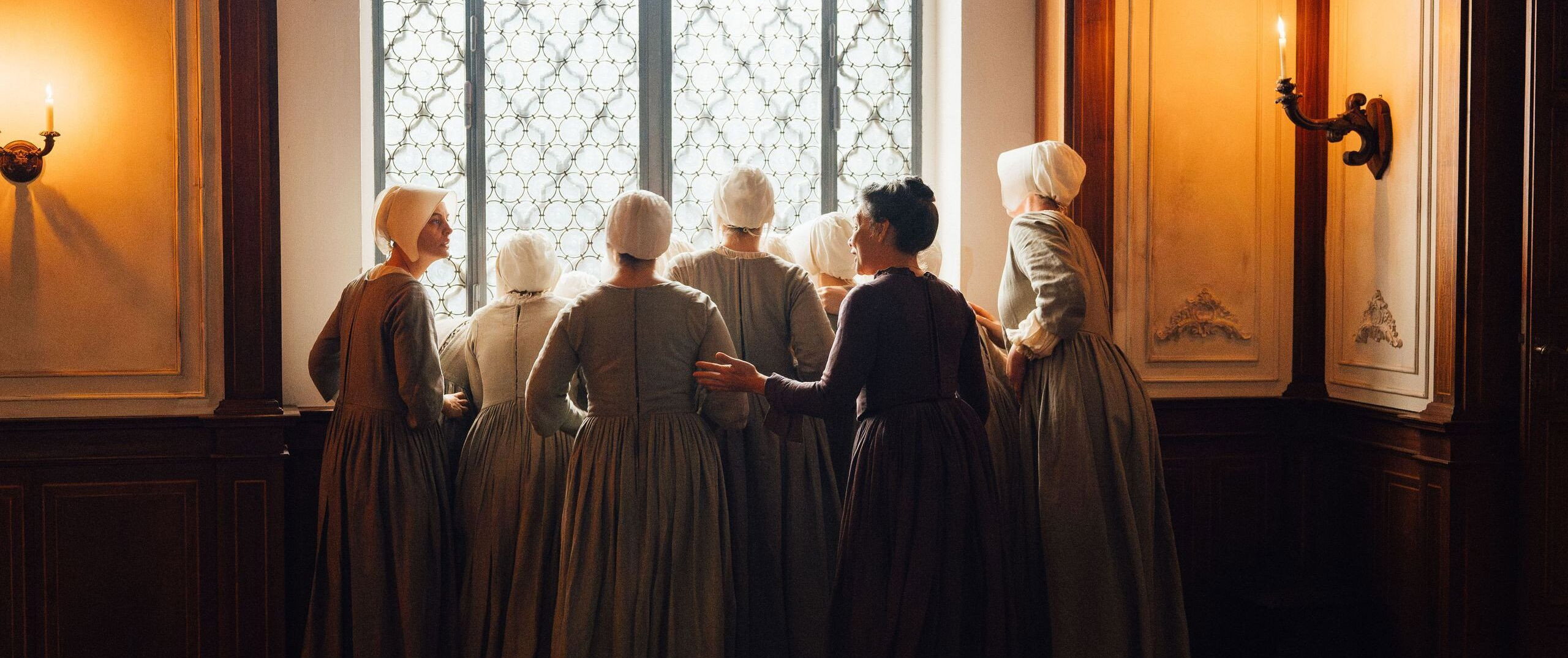
“PRIMAVERA is an elegantly shot study of repression and quiet rebellion.”
The orphanage is the biggest of its kind in the city, but murmurings of rival institutions occur in hushed conversation. The idea of the orphanage as a charitable institution is clearly a fanciful notion, with the institution’s cruel, pantomimic proprietor (the ‘Governor’, never explicitly referred to by name) at one point stating matter-of-factly that “There’s no shortage of orphans in this city”. Vulnerable girls are trained and sold to keep the orphanage in business. When the establishment becomes in dire need of funds, the Governor decides to sack their current musician, instead employing a desperate Vivaldi at half of his predecessor’s rate. Dressed in identical greys and whites, the girls are hardly distinguishable from each other, but orphan Cecilia begins to blossom under Vivaldi’s tutelage. This sparks hopes that her talents with the violin can save her from marriage to a decorated general who will return soon from war.
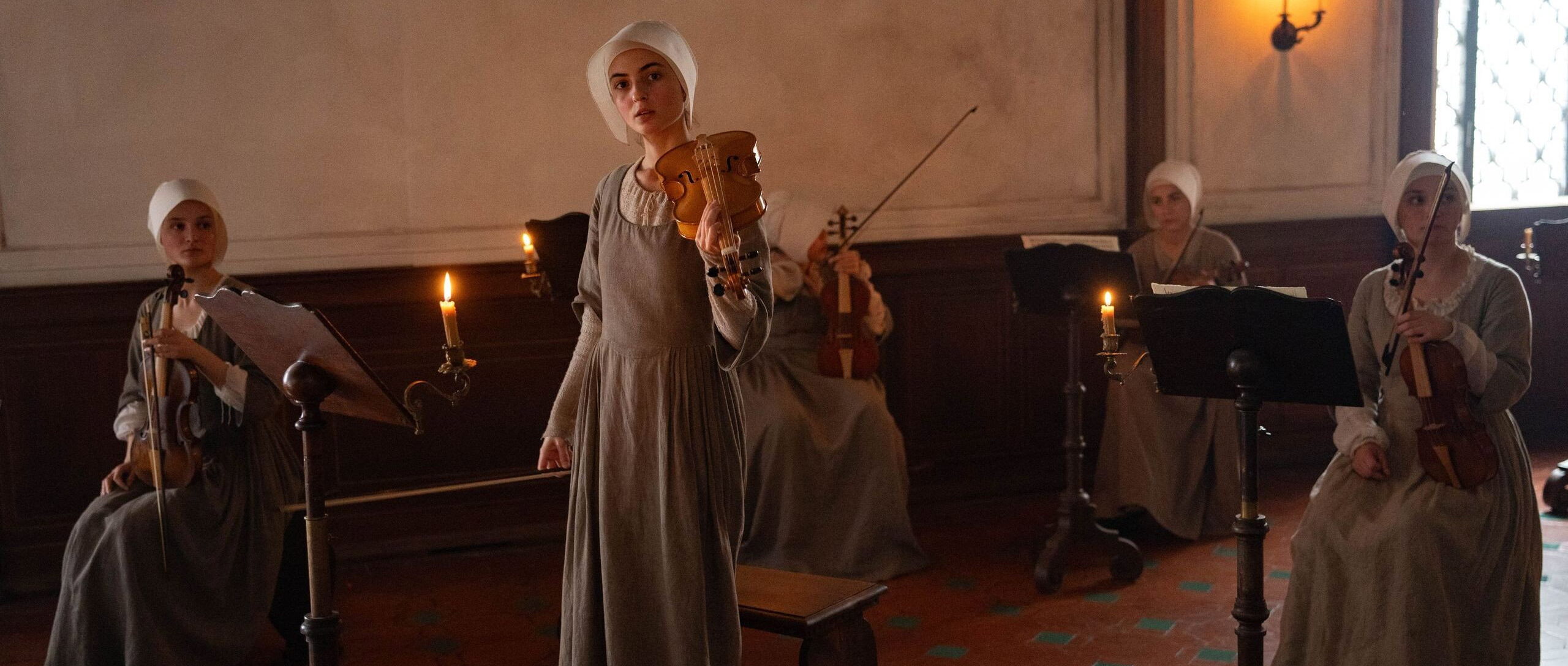
“The black and white dichotomies between good and evil are admittedly drawn relatively thin…”
Based on the 2009 novel Stabat Mater by Tiziano Scarpa, PRIMAVERA is an elegantly shot study of repression and quiet rebellion. Cecilia and her contemporaries are frequently shot behind the grilles of the church that we see early on, and are otherwise presented to amused upper-class onlookers to promote and encourage donations for the orphanage. Vivaldi’s arrival offers the opportunity for liberation, but the same oppressive forces threaten to hinder Cecilia’s chance of freedom. The black and white dichotomies between good and evil are admittedly drawn relatively thin; as the Governor indulges in a lavish meal, the camera provides us with an extreme close-up of his mouth as he enthusiastically gorges on his feast. Cecilia’s potential husband is also crudely drawn in his villainy; pompous and cruel in equal measure. Venice is nonetheless filmed gorgeously in the rare moments when Cecilia can escape from the claustrophobia of the orphanage.
While PRIMAVERA marks Michieletto’s big screen debut, the director is already a versed and celebrated opera and stage director, and his attention to stagecraft is commendable. Cecilia’s liberation takes place within a world of studied claustrophobia. While she and the rest of her female contemporaries are allowed outside on display when they perform for potential patrons and suitors in sumptuous costumes and masks, the orphanage is the cloistered stage where they – and the camera – spend most of their days in modest dress. Visually dynamic and elegantly crafted, Michieletto’s transfer to cinema is a compelling study of repression, suffering and earnest rebellion.