
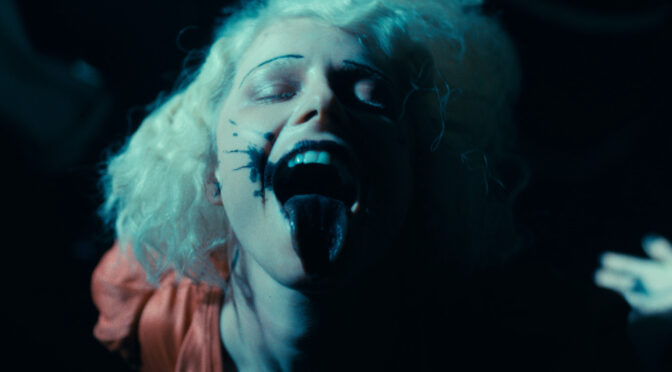
Maggie Gyllenhaal’s THE BRIDE! takes inspiration from 1939’s BRIDE OF FRANKENSTEIN, but looks to recontextualise the narrative trappings with a more feminist thrust. However, even if the film tries to defer to Mary Shelley, the way it does so is frequently bizarre and lacking in coherence. The film takes plenty of swings in all areas – performance, narrative focus, framing devices – but with few working, the film ends up an interesting exercise more than an enjoyable or memorable one.
THE BRIDE! walks down the aisle of cinemas in the wake of a number of attempts to reimagine classic gothic horror such as Eggers’ NOSFERATU and Del Toro’s FRANKENSTEIN. THE BRIDE! pursues something more radical than either of those examples, in that it attempts to recast audience perception of its inspirations whilst also paying respect to the source material (Mary Shelley’s writing, in this case). Jessie Buckley takes on a variety of roles, opening the film as Mary Shelley speaking from beyond the grave. She then possesses a 1930s Chicago woman, Ida (Buckley), to tell a story she could not while alive. When Ida’s bizarre Shelleyan outbursts get her ejected from the mob bar she is in, it ends in a fatal toss down the stairs. She is then reanimated as a partner, given the name ‘Penelope’ (later dubbed The Bride), for Frankenstein’s monster, ‘Frank’ (Christian Bale), with the assistance of Dr Cornelia Euphronious (Annette Bening).
If the shortened log line already sounds a little convoluted, subplots involve a mob clean-up operation, the challenges faced by 1930s female detectives, the ethics of reanimation, parasocial celebrity relationships, sexual violence, consent, exploitation, and the role of disobedience in social movements. The combination is lacking in interesting thematic harmonies and drowns out interesting progression in individual strands.
“The combination is lacking in interesting thematic harmonies and drowns out interesting progression in individual strands.”
Beyond the thematic juggling, the film doesn’t really decide how it wants to be narratively or cinematically either. There are shootouts, dance numbers, supernatural sequences, body horror, and more basic crime drama. Bale and Buckley give engaging performances, but it’s not certain what that engagement is meant to then allow the film to say. Buckley’s performance is certainly flashy, lumbered with carrying the burden of the Shelley embodiment, as well as Ida/Penelope. The film feels like an experiment that permits ambitious performance without saying much to accompany it.
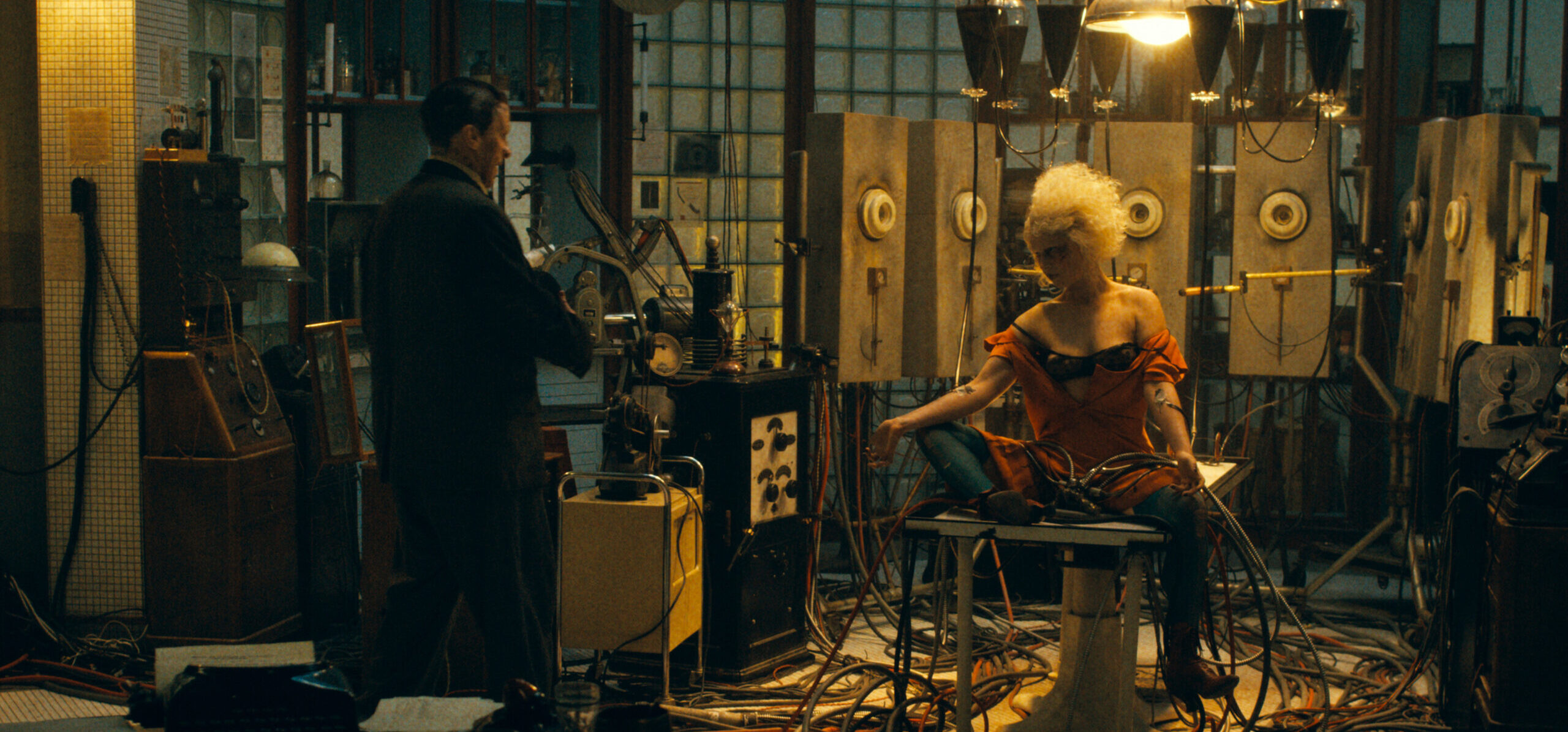
A sense of chaos could be interpreted as part of the film’s objectives. Buckley’s various personas, Penélope Cruz’s detective, and Bening’s Euphronious are all ‘disruptors’ or innovators. However, when the underlying concept belongs to Shelley’s widely-celebrated and long-lauded 1818 novel, the film comes off as simply a more haphazard interpretation of it, both on its own and in relation to its cinematic peers. The film is not innovative or disruptive itself, seeming unsure of whether the genius of these women causes chaos with which men are uncomfortable, or whether it is held back by male chaos.
“The film is not innovative or disruptive itself, seeming unsure of whether the genius of these women causes chaos with which men are uncomfortable, or whether it is held back by male chaos.”
As The Bride becomes an avatar for female resistance, with women adopting her aesthetics in an act of rebellion, the film resembles a response to JOKER; a film whose protagonist also inspires a social movement. That element of JOKER was controversial, in that it was seen as both rebellious but also a problematic expression of male violence. The films even share a composer in Hildur Guðnadóttir, and both rail against an oppressive and amorphous force. Where JOKER positions society, THE BRIDE! strikes against patriarchy specifically. However, whilst THE BRIDE! is a more original-feeling work, it pursues its themes in a blunt and messy manner – at one point Buckley simply screams “Me too!” several times. The result is just as incoherent as Todd Phillips’s simplistic homage to more restrained and coherent films.
Although there is the sense that Gyllenhaal could memorably express some of these ideas if she could only whittle them down, THE BRIDE! is too thinly spread across all areas, stitched together without regard for the uncanny whole. The story of Shelley’s Frankenstein is, in part, about unchecked ambition of such “filthy creation”. In pursuing greatness for himself, Victor brought misery upon a creature of which he lost control. Maybe THE BRIDE! is a good adaptation of her work in spirit, if not in practice.