
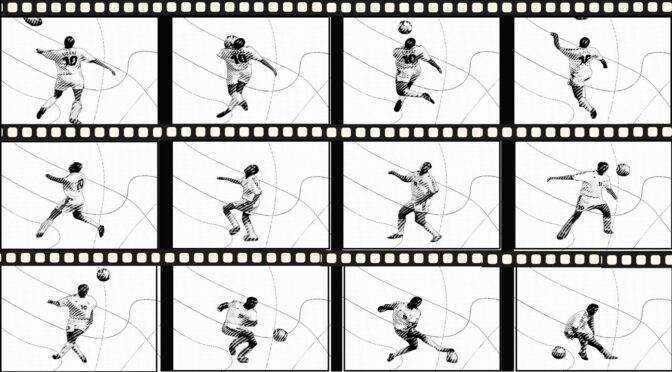
Zinedine Zidane, who recently made his much-anticipated bow as the manager of the men’s French national team, has a case to be the most cinematic of footballers. His career arc has the beats of a great epic: the European frustrations with Juventus; iconic glory with France; a legendary chapter at Real Madrid; a typically enigmatic but glorious managerial career.
His return as a player to the France team after an initial retirement rallied his compatriots in 2006, before the inexplicable ignominy of his World Cup final headbutt and dismissal. A return to Real Madrid as manager led to an unprecedented hat-trick of European Cup victories. Even his playing style was full of fluid, cinematic grace, all artful first touches and elegant turns rather than blood and thunder (even if his strength and frame made him difficult to butt aside). More than two decades on from release, ZIDANE: A 21ST CENTURY PORTRAIT remains a high watermark for footballing cinema, abstract character study, and film as digital art installation.
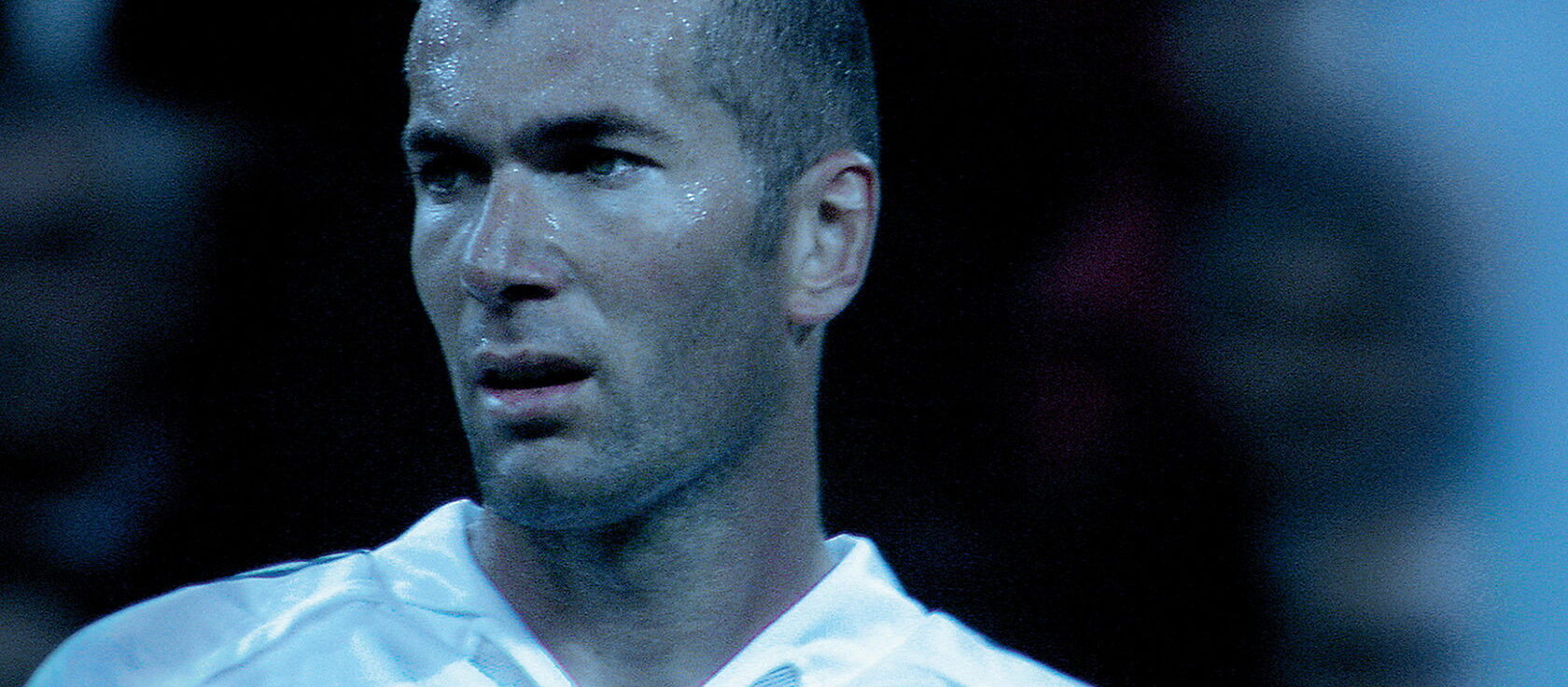
“…ZIDANE: A 21ST CENTURY PORTRAIT remains a high watermark for footballing cinema, abstract character study, and film as digital art installation.”
Directors Douglas Gordon and Philippe Parreno trained seventeen cameras on Zidane during a La Liga match between Real Madrid and Villareal in a manner akin to Hellmuth Costard’s 1971 portrait of Manchester United legend George Best, FUSSBALL WIE NOCH NIE. However, there is something about Zizou, as he is known, which encourages an engagement with his more inscrutable grace beyond the tragic flawed genius of Best. It doesn’t seem coincidental that Zidane’s final folly in headbutting Marco Materrazi also precipitated filmmaker and writer Jean-Philippe Toussaint’s essay La Mélancolie de Zidane. The essay frames his dramatic final playing act as something that ruptures the notion of it being a simple sporting event, or Zidane being a simple athlete, presenting it as more existential expression of something concluding. The mere existence of both La Mélancolie de Zidane and ZIDANE: A 21ST CENTURY PORTRAIT speaks to the idea that Zidane’s balletic movement and flowing motion inspire thought and artistry beyond that conducted with a football.
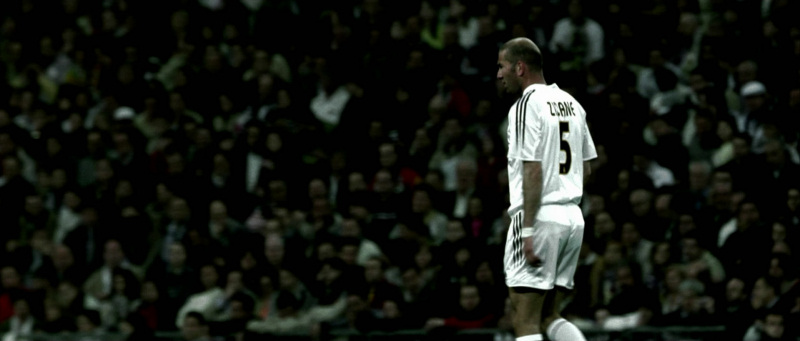
“…Zidane’s balletic movement and flowing motion inspire thought and artistry beyond that conducted with a football.”
Indeed, unlike the sparse FUSSBALL WIE NOCH NIE, Gordon and Parreno are not content to leave us with simply Zidane, at least not entirely. We experience the player’s reflections on his career as unnarrated subtitles. Those are rendered all the more fascinating given the film’s release mere weeks before his violent departure from the playing stage. Just as in that ill-fated final appearance, Zidane leaves the field of play in the film after being dismissed with a red card.
The soundtrack from Scottish band Mogwai amps up the cinematic intensity of a near-constant gaze on Zidane, but not in a manner that relies on thunderous and constantly intense instrumentation. Black Spider is the most notable track and builds to a guitar-driven hum of intense concentration. However, throughout the listing, tracks such as 7.25 strip back and leave Zidane as a seemingly lone figure echoing around the Santiago Bernabéu, even as more than 80,000 fans chant. The musical augmentation brings to mind the montages put together by the likes of the BBC for sporting events, to reflect on the high and lows of a given match or tournament (many of which have featured Zidane), but the objective in ZIDANE: A 21ST CENTURY PORTRAIT is not to elicit an immediate and visceral emotional response, but to sink deeper into a fascination with the machinations of one man within a team, a stadium, and a sport.
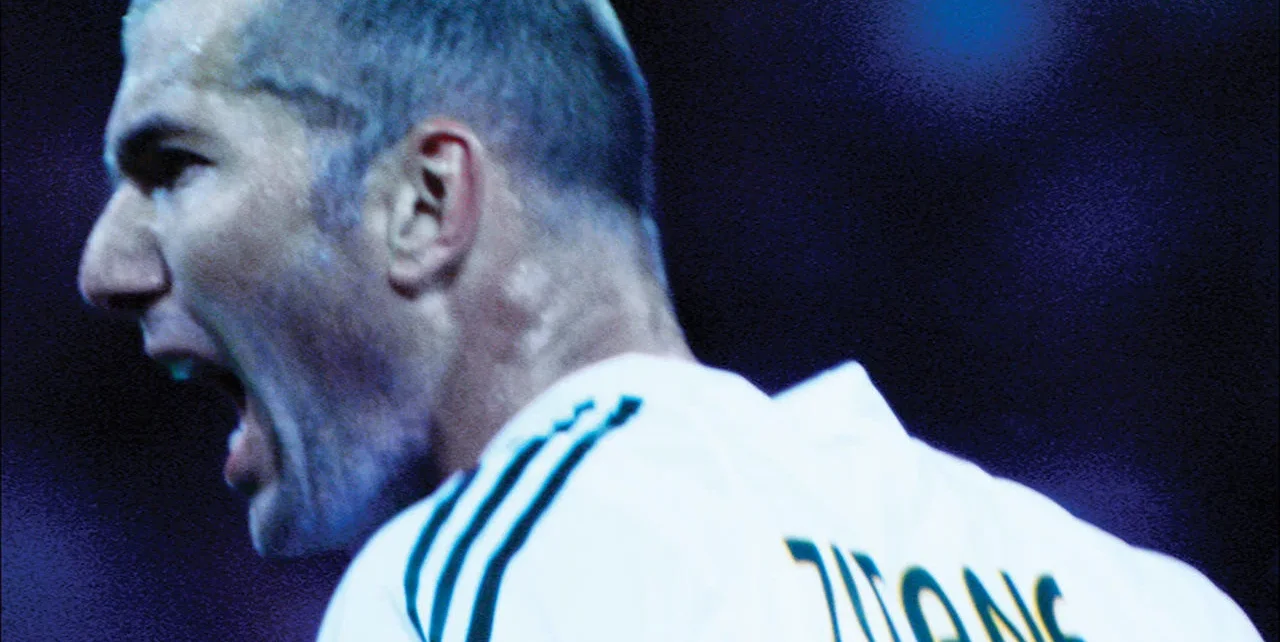
“…the objective [is] to sink deeper into a fascination with the machinations of one man within a team, a stadium, and a sport.”
The musical approach and the entire conceit is a precocious view of football fandom in the 21st century. Zidane’s playing career ended just as the era of the Messi-Ronaldo duopoly began. Between Zidane’s retirement in 2006 and the 2023 Ballon D’Or (awarded to the player considered the ‘best’ over the previous year), Lionel Messi and Cristiano Ronaldo won the award 13 times between them in 16 years, with those results reflecting an era of player fandom rather than team fandom. Since the release of the film, broadcast options that follow a single player during a match, rather than the traditional camera view, have become commonplace. ZIDANE: A 21ST CENTURY PORTRAIT reflected the exacting gaze of specific player fandom, long before it became embedded in football culture.
“The musical approach and the entire conceit is a precocious view of football fandom in the 21st century.”
The film has continued to have a life beyond theatrical screens. As part of events around the 2026 World Cup, the Guggenheim New York publicly exhibited their video installation of the film for the first time. The theatrical version plays concurrently with raw footage from one of the seventeen cameras that captured the match against Villarreal, occasionally synchronising. The fact there are essentially many versions of the film highlights the constructed reality of cinema, even in documentary form. However, it also displays that ‘art’ cinema is accessible, and need not be an opaque concept. What better way to give a football fan a new view of the sport they love than providing a literal new view of it? If the film takes heavy inspiration from FUSSBALL WIE NOCH NIE, it has renewed that influence for the new century. KOBE DOIN’ WORK from Spike Lee is a clear stablemate, but the documentary JOHN MCENROE: IN THE REALM OF PERFECTION is probably the best subsequent expression of using cinematic techniques to take external observation and imbue it with a sense of the athlete’s interiority.
As Zidane embarks on a new chapter of a managerial career as enigmatic and mercurial as his playing one, ZIDANE: A 21ST CENTURY PORTRAIT stands as a key pillar of his enduring mystical status twenty years on.