

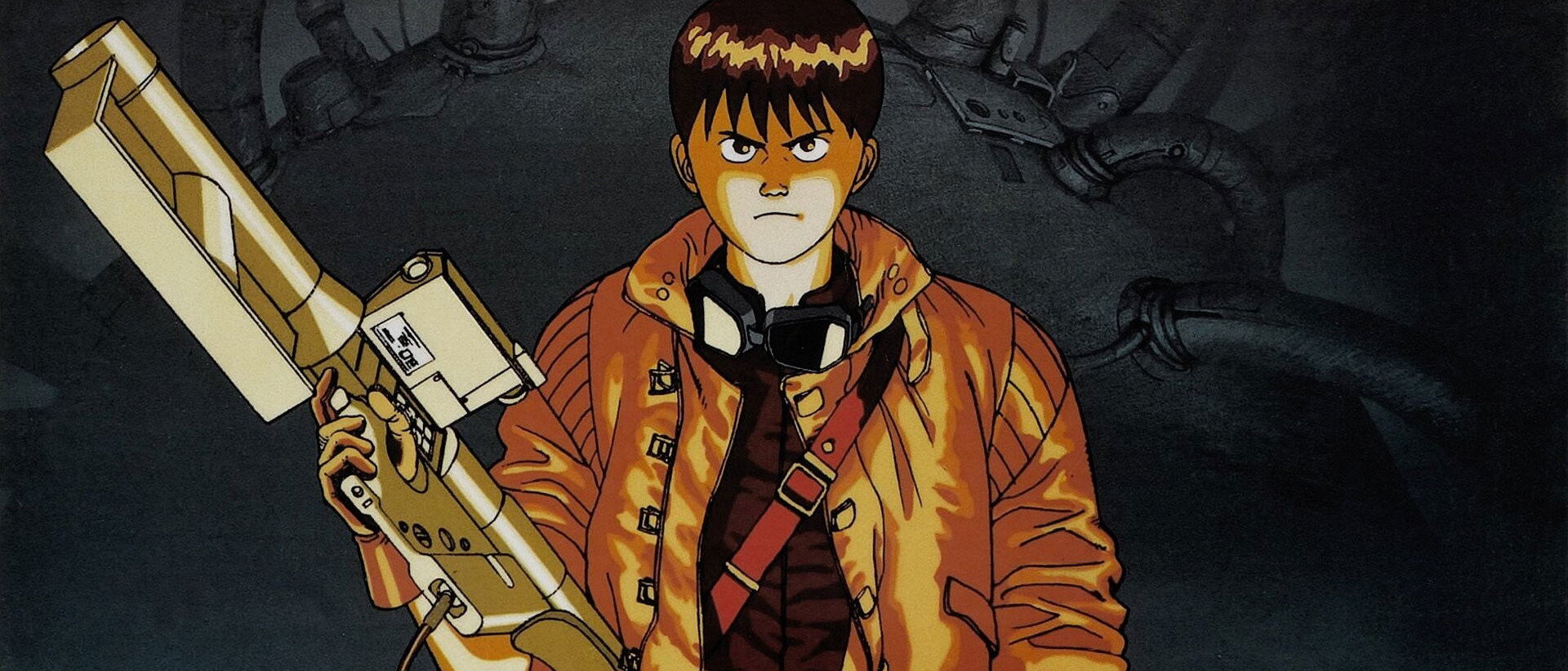
As AKIRA took to the cinema screen once again for a re-release just this year, it reminded us of its storming arrival to the science-fiction genre in 1988. AKIRA, directed by Japan’s Katsuhiro Otomo, introduced western audiences to an unforgettable Neo-Tokyo where the artificial glow of billboards, the motorcycle gangs and towering infrastructure suffocate and overcompensate for a city once destroyed by a catastrophic explosion. While the film remains an aesthetic benchmark for the cyberpunk genre, its true power lies beyond its visual style. Today, cyberpunk can function as an urgent critique of modern society, offering us a way to navigate our present technological anxieties and to reclaim agency over our collective future.
The cyberpunk movement was a response to the broader science fiction genre. Writers in the 1970s believed it had become exhausted with overused tropes and characters. In the 1980s, cyberpunk took aspects of science fiction such as the development of high-technology, and began to express societal frustrations and anxieties surrounding these advancements at the time. Cyberpunk writers mainly focused on the lower classes of society, where the consequences of these advancements were felt the most. These technological advancements are juxtaposed with the alienation of the characters, highlighting cyberpunk’s core interest in exploring how isolated individuals attempt to survive the societies that have moved on without them. This central theme is why AKIRA continues to resonate for sci-fi audiences; abstract anxieties are grounded in the reality of Tokyo’s lower classes.
“…AKIRA continues to resonate for sci-fi audiences; abstract anxieties are grounded in the reality of Tokyo’s lower classes.”
Neo-Tokyo is a city plagued with unbearable violence and government corruption; a dystopian metropolis rebuilt from the rubble of past trauma, with a population losing its bearings. When gang leader Kaneda and his friend Tetsuo take to the streets with motorcycles, their surroundings are soaked with neon lighting in a world balancing on the edge of another collapse. The catalyst of the film is a weapon that characters refer to as ‘Akira’, the nature of which we only gain insight to later. For the majority of the film, whether ‘Akira’ is a person, an otherworldly entity or a physical weapon is ambiguous. This uncertainty speaks to the nuclear anxieties of post World War ll Japan but also the general apprehension around the advancement of war weaponry. By framing AKIRA not as a villain or a machine, but as an uncontrollable force, Otomo captures the terrifying realization that humanity has engineered powers capable of erasing its own existence.
“Like the military officials in AKIRA who mindlessly harness a power they don’t understand, a capitalist need for market dominance is fuelling a race to take control of A.I. with little regard to human impact.”
Today, this existential dread has shifted to the digital realm; a space of boundless potential that is at once deeply empowering and utterly overwhelming, giving individuals an immense amount of agency while masking the unknowable impact of the technology we enable. We especially see it in collective anxiety surrounding Artificial Intelligence (A.I.) where adoption and capability is accelerating faster than we can regulate or comprehend. Like the military officials in AKIRA who mindlessly harness a power they don’t understand, a capitalist need for market dominance is fuelling a race to take control of A.I. with little regard to human impact.
So, in terms of whether cyberpunk still lives on, Bruce Sterling, one of the pioneers of the movement, captures it perfectly when asked about the subject; “As a wave crashes to the shore we don’t lament the ocean’s death, as it brings fresh oxygen”. Cyberpunk doesn’t need to be trapped by its aesthetics, and will continue to evolve as a way for us to explore our ongoing worries and fears about technology. As Joseph Hurtgen suggests, we should view it through the lens of ‘cyberpunking’, a practice where we consider the implications of advanced technology in our modern society and “if the result of cyberpunking looks dystopian, cyberspatial, or genetically modified, it’s because the rise of fascism technologically infused reality, and eugenics is ever with us”. The act of ‘cyberpunking’ allows us to connect the ideas of AKIRA to our current world but also helps ease our anxieties about the unknown. As the catastrophic explosion subsides in the film’s final sequence, the evidence of a land reborn takes the form of a tiny, glowing sphere of light in Kaneda’s hand. For the first time in the film, power is recentred and Kaneda and his friends are given the ability to begin a new chapter.
“The act of ‘cyberpunking’ allows us to connect the ideas of AKIRA to our current world but also helps ease our anxieties about the unknown.”
The narrative of AKIRA speaks to audiences so strongly because it reminds us that history does not move in a straight line, but rather a loop, where the ruins of Neo-Tokyo feel inevitable yet not a final endpoint. Human minds have wrestled with this unrelenting truth since the beginning of time; that we are simultaneously a victim and perpetrator of our own progress. Yet, AKIRA refuses to offer a purely hopeless prognosis and instead insists on human agency, where we are not tied to a pre-determined destiny. Kiyoko shares profoundly, at the end of the film, that “there must be a future that we can choose for ourselves”.
We live in a world where violence and destruction feels inescapable, and where tech executives continue to try to convince us that A.I. is the future we must accept. Nonetheless, we still have the power to decide the type of people we want to be and our path through history. AKIRA may not suggest a perfect tomorrow, but promises a future we can choose.