
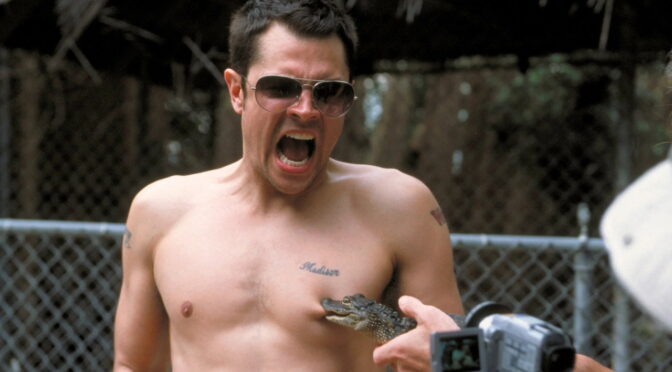
Moving from the disturbing to the strangely absurd, Bob Flanagan’s work demonstrates how pain becomes more than a private experience; it becomes something that can be performed and witnessed.
Flanagan, in his 1985 poem ‘Why’, attempts to articulate the impulses behind his pain, writing, “because I felt like I was going to die” and “because it’s against my nature/because it’s in my nature”. This contradiction between these two statements captures the complexity of Flanagan’s work, in which suffering becomes both an assertion of personal identity and a confrontation with the body’s vulnerability. His unique willingness to embrace pain challenges the distinction between self-destruction and self-expression, transforming an intensely personal experience into something that can be shared with an audience.
Self-inflicted pain is often understood as a deeply private experience, rooted in personal suffering and mortality, yet when that pain is deliberately performed for others, cultural critics such as Phillipa Snow and Slavoj Žižek argue that it transforms into a medium of self-expression. From the work of Bob Flanagan to the lowbrow, mainstream spectacle of the JACKASS films, self-injury becomes culturally valuable through its exposure to an audience, raising the fundamental question of whether suffering only acquires cultural meaning when it is witnessed by others. While the impulse to suffer may be born in isolation, when it is deliberately performed, the audience changes what that pain means.
In 1998, Johnny Knoxville filmed his first segment for Big Brother Magazine, in which he wanted to try several pieces of self-defence equipment on himself. Introducing himself as; “Johnny Knoxville, United States of America”, he and his friends drove to the desert, where Knoxville then proceeded to put on a bulletproof vest and a bunch of magazines under his shirt and shot himself with a .38 calibre revolver. Ultimately, the act is pointless, the pain is useless; Knoxville does not shoot himself because anything needs to be accomplished yet this uselessness is what makes the stunt so entertaining.
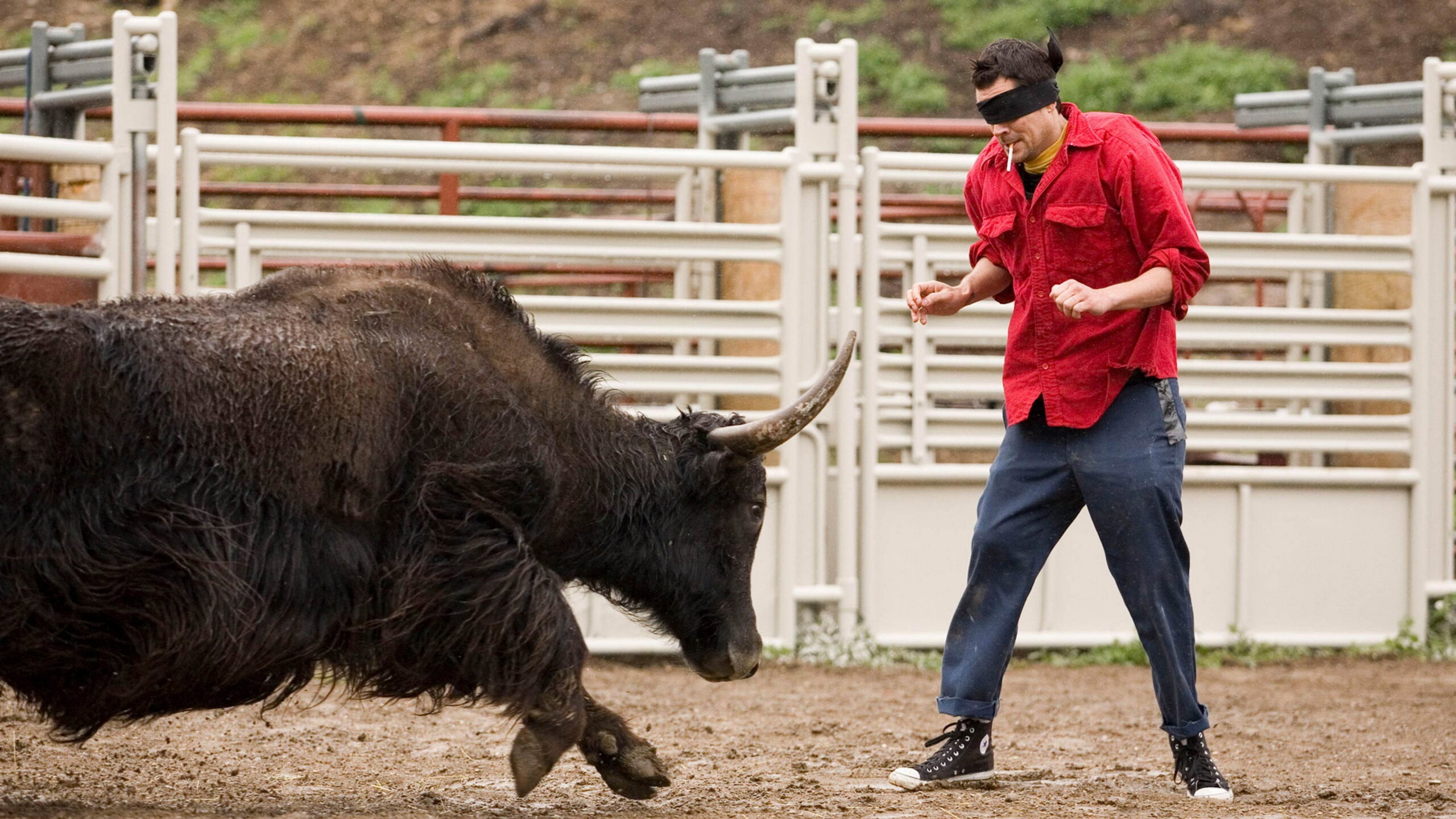
“In a way, the body becomes a performance where suffering, liberation, absurdity, and anger can be expressed.”
The spectacle is not the gun or even the action itself, but Knoxville’s body being placed in danger. Phillipa Snow, author of Which As You Know Means Violence, argues that, here, Knoxville doesn’t present himself as a man at all but rather a metaphor; “a walking, talking, self-abasing national id”. In a way, the body becomes a performance where suffering, liberation, absurdity, and anger can be expressed. While it wasn’t Knoxville’s intention, his Big Brother Magazine segment became an incredibly strange performance on masculinity and national identity where his body was no longer simply a body being subjected to violence but rather a medium through which violence can be turned into entertainment. His body becomes a symbol of a national identity built around toughness and fearlessness, yet the ridiculousness of the stunt itself simultaneously undermines these ideals, exposing the fragility beneath the performance of masculinity.
When Knoxville sat in the back of their car as he and his friends fled the scene, he didn’t have the look of someone who just shot themselves. Instead, he wore a wonderfully mischievous grin, a grin that would last for decades, one that would soon enough become the face of the now widely known franchise: JACKASS. Looking at Knoxville’s career trajectory from his first segment with Big Brother Magazine to JACKASS: BEST AND LAST we can see this shift in Knoxville, a shift that is interesting to consider when exploring the spectacle of self-injury as entertainment.
“…the question is no longer why someone would willingly hurt themselves, but what happens when being watched becomes part of the reason to hurt?”
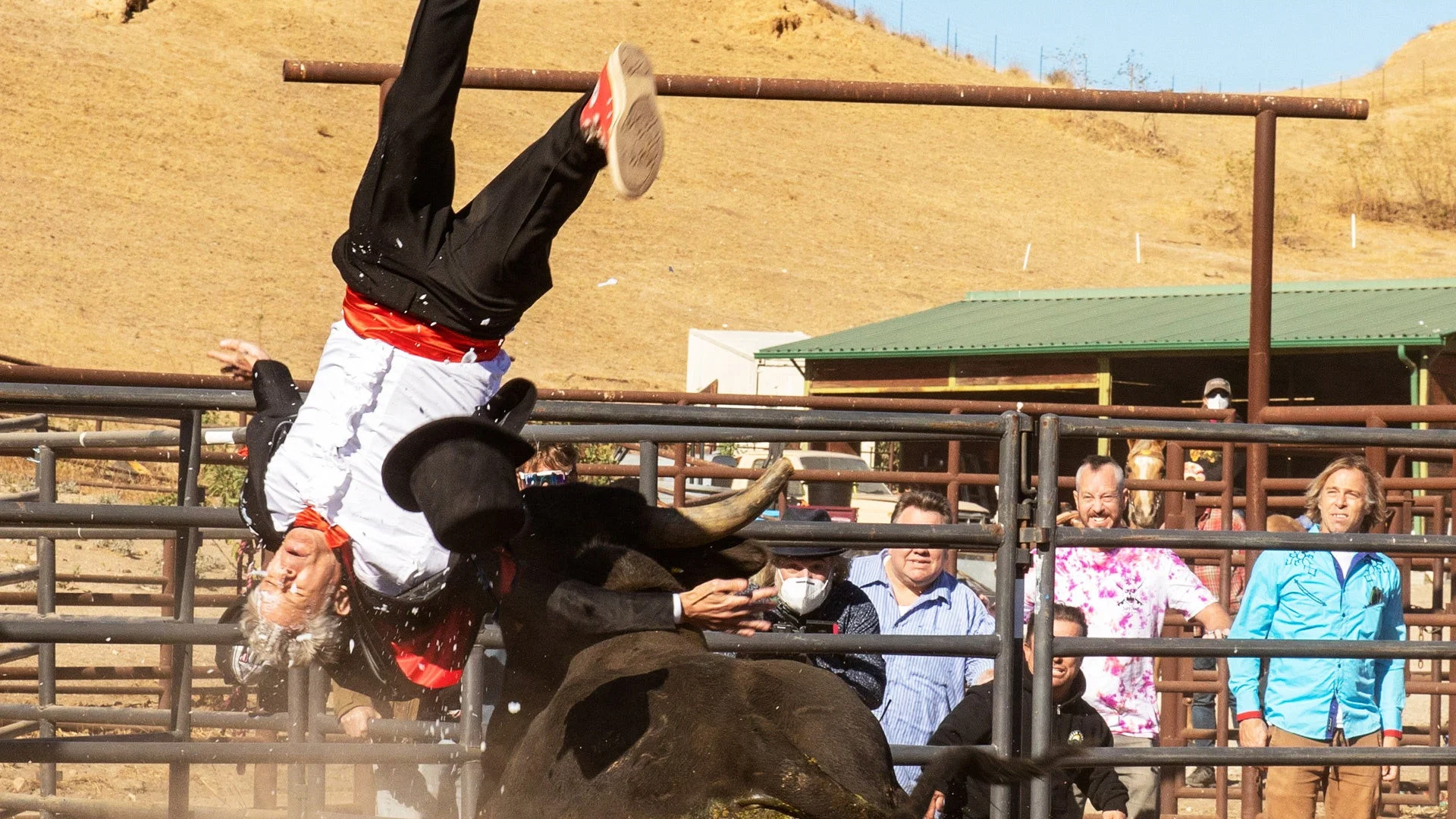
It’s hard to pin down the exact point in time where Knoxville goes from just performing dangerous stunts in front of the camera to asking his director, Jeff Tremaine, after being plummeted by a bull, “Did we get the shot?”. The question is significant because it reveals that for Knoxville, the pain itself is no longer the ultimate point of the stunt. Not that Knoxville ever cared much about his injuries, but the outcome of this particular stunt was very different and has led him to be unable to perform with bulls ever again. Somewhere between the desert in 1998 and JACKASS: BEST AND LAST, Knoxville has seemingly stopped just subjecting his body to violence, and has, to some extent, given himself over to the spectacle that his body produces. In a way, the question is no longer why someone would willingly hurt themselves, but what happens when being watched becomes part of the reason to hurt?
This shift becomes even more interesting when looking at another member of the JACKASS group, Steve-O, who has spoken a lot in the past about why he does his outrageous stunts in the first place. In an interview on YouTube channel Mythical Kitchen, he says he’s constantly confronting mortality and after dropping out of college he believed he “was gonna die having failed miserably at life”, and that he was angry about it; his stunts, he explains were a way of “lashing out in frustration at death” which he felt was just waiting for him “imminently”.
“Steve-O’s stunts become a physical way of externalising something that is otherwise difficult to articulate; his fear of failure and the knowledge of his own mortality.”
Steve-O’s stunts become a physical way of externalising something that is otherwise difficult to articulate; his fear of failure and the knowledge of his own mortality. This aligns with Slavoj Žižek’s assertion that, “In order to attack the enemy, you have to beat the shit out of yourself: to get rid in yourself of that which attaches you to the condition of society”. This quote offers another understanding of Steve-O’s stunts; that self-inflicted violence can also be read as an attempt to confront and reject the feelings of failure that he associates with his place in the world. By destroying his own body on camera, he preemptively punishes himself, thereby stripping society of its power to deem him a failure. Yet JACKASS transforms this private confrontation into a public spectacle where Steve-O’s pain is no longer only something he experiences, but something he performs.
The stunts performed in JACKASS carry this same expression of failure. Bodies are presented as incompetent, fragile and ridiculous, bringing vulnerability into conflict with traditional masculine norms. Yet JACKASS cannot fully reject masculine ideals because the way to make that vulnerability acceptable was by transforming it into comedy and a spectacle, essentially limiting the liberation Snow and Žižek believe can be expressed through self-inflicted pain. This transformation creates a contradiction where vulnerability is permissible when turned into entertainment and their bodies can fail, but that failure must still produce a spectacle.
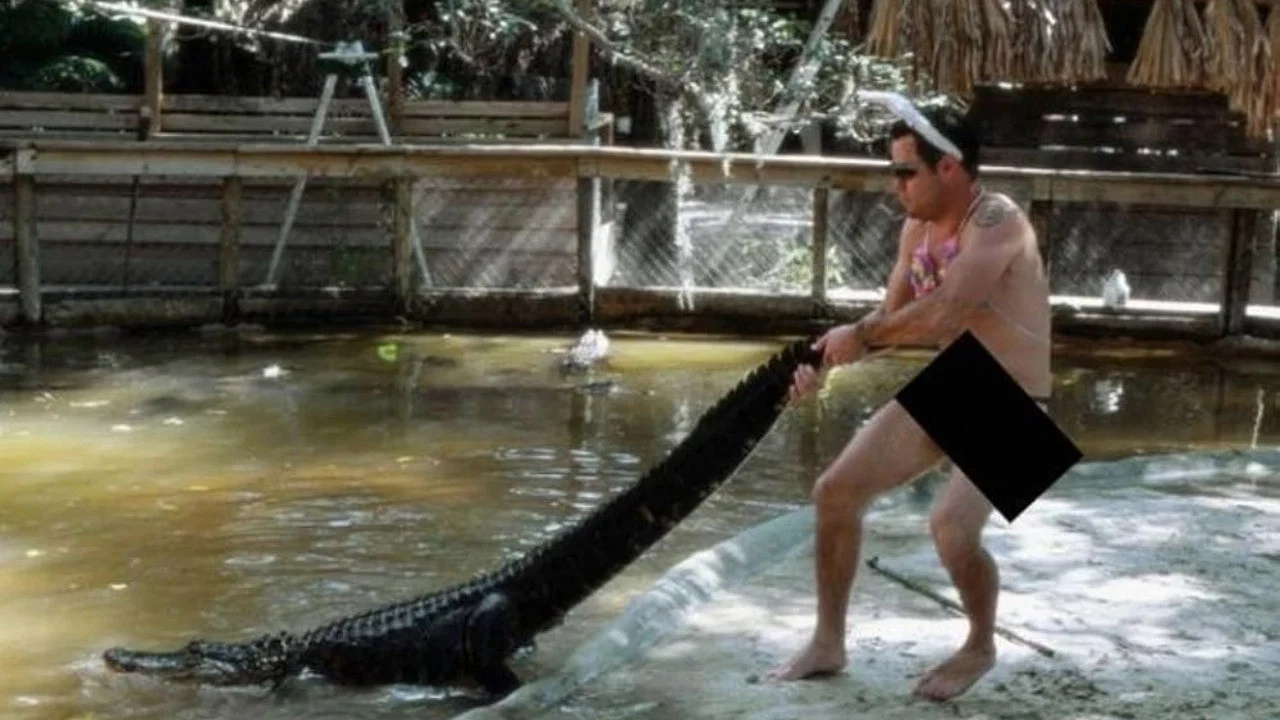
“…the absurd violence of the JACKASS films goes beyond self-destruction, entering a medium of self-expression through which their suffering gains cultural meaning between the performer and spectator.”
This individual purging is scaled up through what Uncas Blythe terms the JACKASS member’s role as “voodoo medics” for traumatized, “post-9/11 American society” which is compelling to consider when Knoxville has noted himself that his injuries feel collectively shared with the people watching him. As Blythe observes in Snow’s Which As You Know Means Violence, “there is something uniquely bonding and yet strikingly odd about repeatedly watching the same people suffer humiliation, pain, fear and revulsion again and again… Everyone, actor and spectator alike, is bound in an inescapable ritual”. In this sense, the spectator no longer is just a passive consumer but rather they are an accomplice in the spectacle, giving meaning to the violence by simply being unable to look away. It produces an interesting conversation surrounding the voyeuristic tendencies of humans where we validate the performers’ suffering, hence, completing the cycle of entertainment.
Therefore, the absurd violence of the JACKASS films goes beyond self-destruction, entering a medium of self-expression through which their suffering gains cultural meaning between the performer and spectator. Pain begins in the body, but when given agency over that suffering, it becomes externalised, performed and shared. This is what makes the relationship to self-injury and entertainment so compelling. We must confront what we are willing to do to our bodies, what we are willing to share with others and to the possibility of taking agency over the very things that make us vulnerable.