
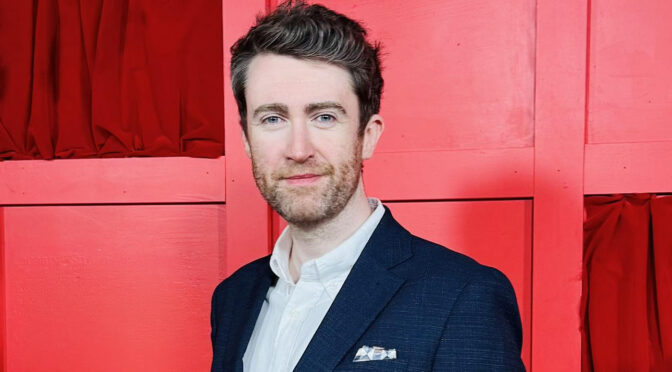
In Scottish romcom PREMATURE, platonic flatmates Cameron and Eilidh find themselves faced with a pregnancy after one impulsive night. Director Kevin Walls talks about his experience finding the right leads, doing Glasgow justice on screen, and why, to him, PREMATURE is a coming of age story at heart.
Scott Wilson: You have said you wanted to stop waiting for permission to become a feature filmmaker. Was there a specific moment where something clicked, and you thought ‘it’s now or never’?
Kevin Walls: I realised I’d spent the past decade building up the skills to go out there and make something, whether that be taking screenwriting night classes that led to a master’s degree in screenwriting, that then led to writing on [Scottish soap opera] River City and things like that. Then I did my acting degree and started to understand the process more. I got to the stage where I felt like I had a decent understanding of the entire process, or as much of it as I could get a handle on, and I could get people together and just go and do it.
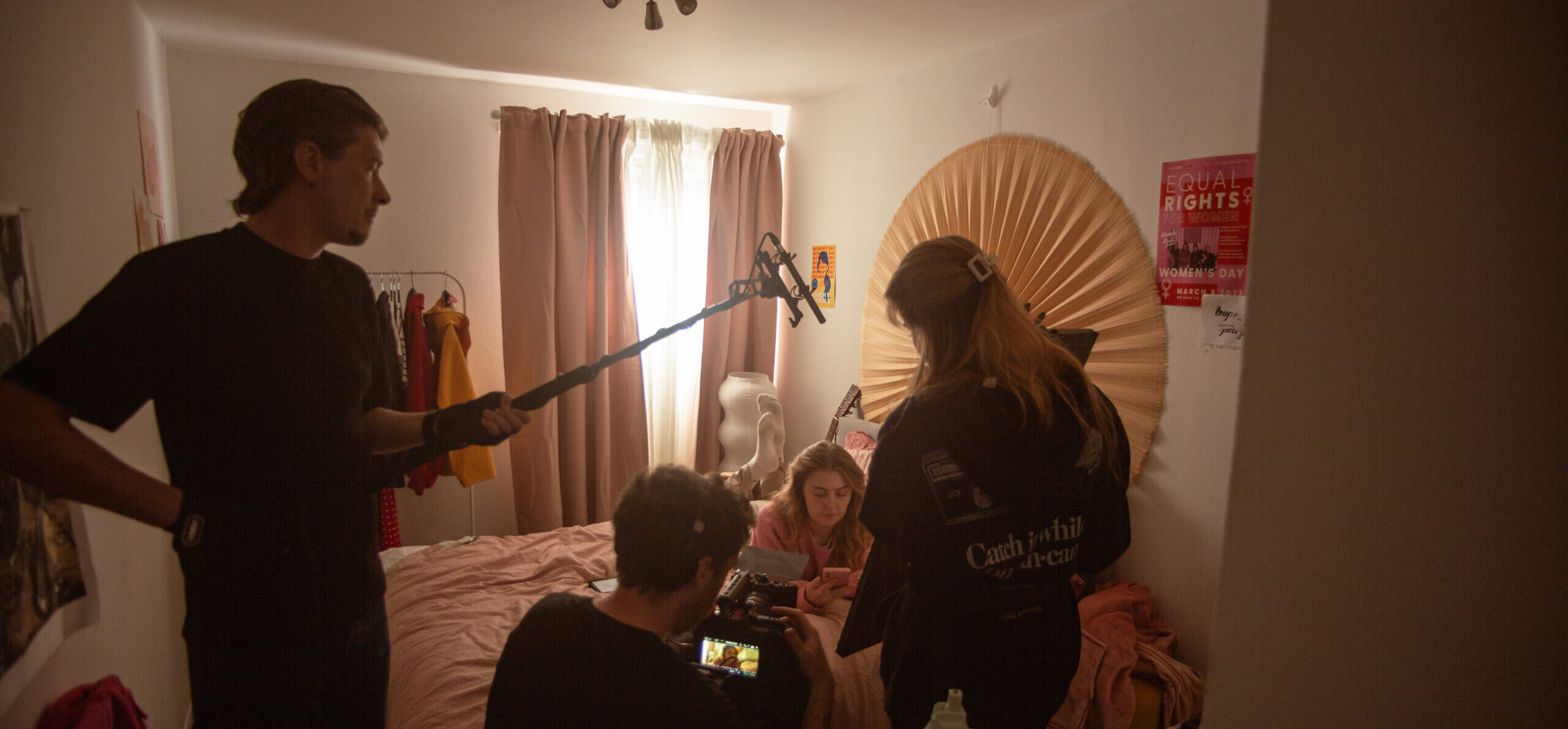
“I don’t think anyone really had an ego [on set], and if they did have an ego they would get the pish ripped right out of them, like instantly.”
SW: Cinema is notoriously difficult to access for working-class creatives. What is the difference to the filmmaking process when more people feel welcome in it?
KW: I don’t know if I can speak for the filmmaking process at large, but I can talk about our experience on the film. Everyone was so passionate about filmmaking, and for a lot of people it was their first time being involved in a feature. What that brought to it was a level of enthusiasm and excitement that might get lost if maybe you’re in more of a position of privilege, but I’m not sure. I don’t think anyone really had an ego, and if they did have an ego they would get the pish ripped right out of them, like instantly.
I think sometimes people assume that working-class stories means gangs and stuff like that. Whereas that was not the experience for me growing up. Those people bullied me because I was into the arts. Working-class stories can be really fetishised, by TV commissioners potentially more so than in film, I think. And it’s an experience I would assume doesn’t ring true for a lot of working-class people because we don’t just have one perspective.
We made the decision to not film in the West End because not everyone in Glasgow lives in a West End tenement. So we shot in a flat in the East End, and it’s great because people live in these places and they have these experiences.
SW: What made you decide Glasgow was the place to set PREMATURE and that this was the way to represent Glasgow?
KW: I’ve spent my life in Glasgow, really. I grew up in Kirkintilloch not far from the city, and would always spend time there. I remember being young and thinking, “I’m gonna move somewhere else and do all this stuff and get out of Glasgow”.
I remember going to New York; I think it was my 25th birthday. I love New York, I think it’s a brilliant city, but it reminded me of Glasgow so much. There are pockets that make me go, “Oh there’s a similar energy here.” And then I thought about all the great films that are set in New York and the variety of films. I was like, “Why are we not doing this?”I love seeing the New York subway on screen, and I tried so hard to get a sequence set in the Glasgow subway, but we couldn’t make it happen.
Visiting New York, I realised we have a city just like other cities in the world. But we don’t get to see that on screen, and there’s a story in every house, flat, job. It was the realisation that if people can make things in New York and LA and Paris, why are we not doing it here?
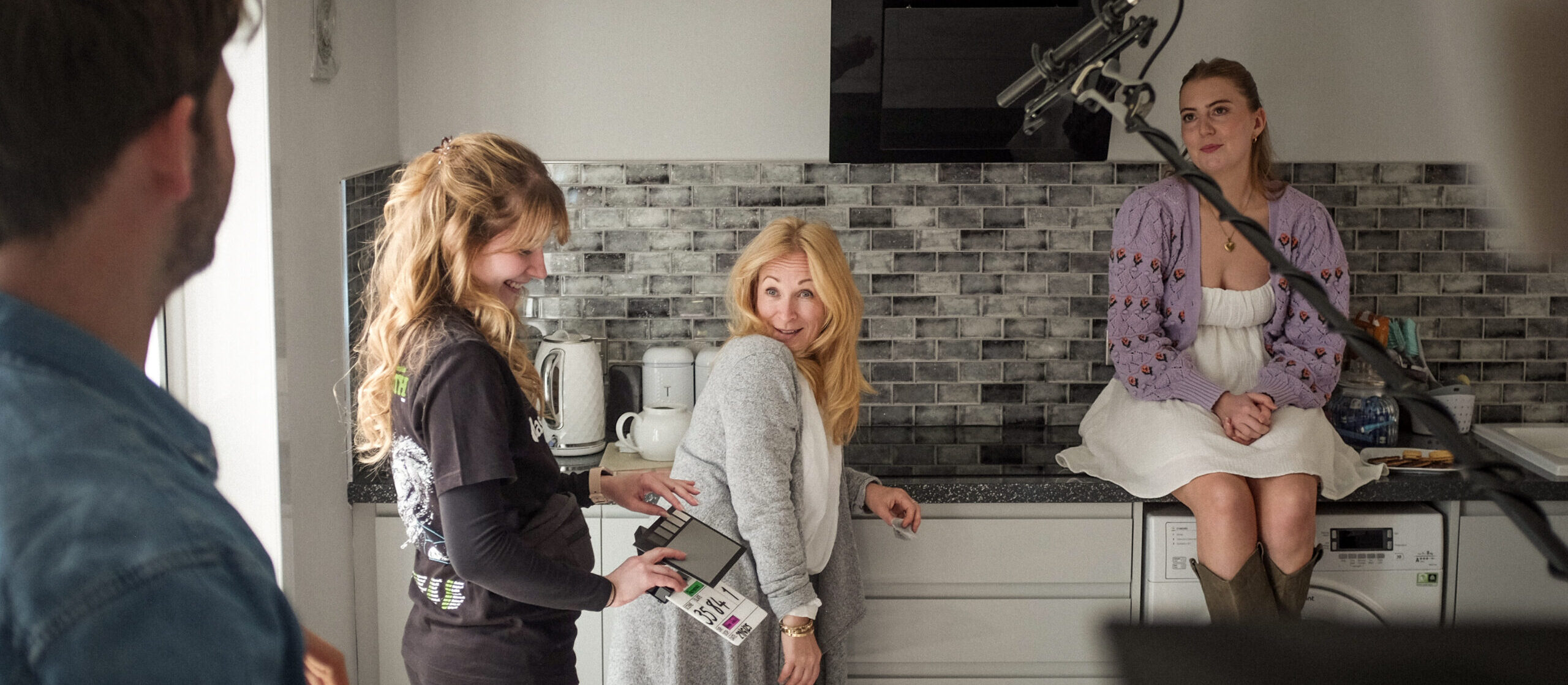
“Visiting New York, I realised we have a city [with Glasgow] just like other cities in the world. But we don’t get to see that on screen, and there’s a story in every house, flat, job.”
SW: The film is about millennial anxieties: waiting for permission, false promises. Why did you decide a romcom was the best way to examine those topics?
KW: I don’t know if I should be admitting this, but I think it’s quite easy to package this as a romcom because there are two people in it, and they have their romance and there’s funny stuff. But for me, it’s a coming-of-age story at its heart. I know coming-of-age stories are usually for people in their teens, but I feel like there’s a kind of arrested development around the whole millennial experience. Obviously, COVID has had an impact on that as well. But I kinda feel like, when am I gonna be an adult? I’m 36, almost 37, and I work, I teach film and TV, and there are times where I’m like, “I don’t feel grown up or responsible at all.” So that’s one of the things I was really interested in exploring.
It wasn’t even supposed to be a romcom initially. It was supposed to be about a couple who’d been together for forever and who were pregnant and then were trying to work out if they were right to raise a baby together.
I think one of the things I really love about what we managed to do was tell the story of these two individual people who are trying to figure out their own lives and have just kind of managed to get intertwined, and not in a way that feels romantic. But then they discover that actually there’s something there, and I think that’s maybe more truthful than having a meet cute. Which I’m not against. I love a good meet cute, don’t get me wrong.
I think if you’re really into romcoms, you’ll find something familiar here that will work for the expectations set by that genre. But I also hope to have carved out a bit of depth that will resonate with people beyond what the plot entails and maybe kind of digs into what the characters are going through underneath it.
SW: It’s important there’s chemistry in the story you’ve told. How did you know when you’d found your Cameron and Eilidh?
KW: It was tough going to find the right actors for the role. I think we saw about 54 actors for Eilidh and 22 for Cameron. We saw some really great actors, but I think we only called back three for each role. There were a lot of actors that when you’re watching the tape, something’s just not resonating. And sometimes it’s really hard to articulate why it’s not working, which can be frustrating for an actor if they ask for feedback, and it’s often not something that they’ve done, it’s just something that is.
Casting James [Rottger] and Elle [Watson] in those roles, you kinda knew from the first couple of seconds of their tape that they knew the characters. It was present in their physicality. I’m not even talking about massive things they were doing, just subtleties that you could spot in the tapes.
I’d worked with Elle before on a short film, so I already knew she was really funny and a great actor to work with. And then James I’d seen do some scratch theatre before, so I hadn’t met him in person, but I was aware of him, and we followed each other on Instagram.
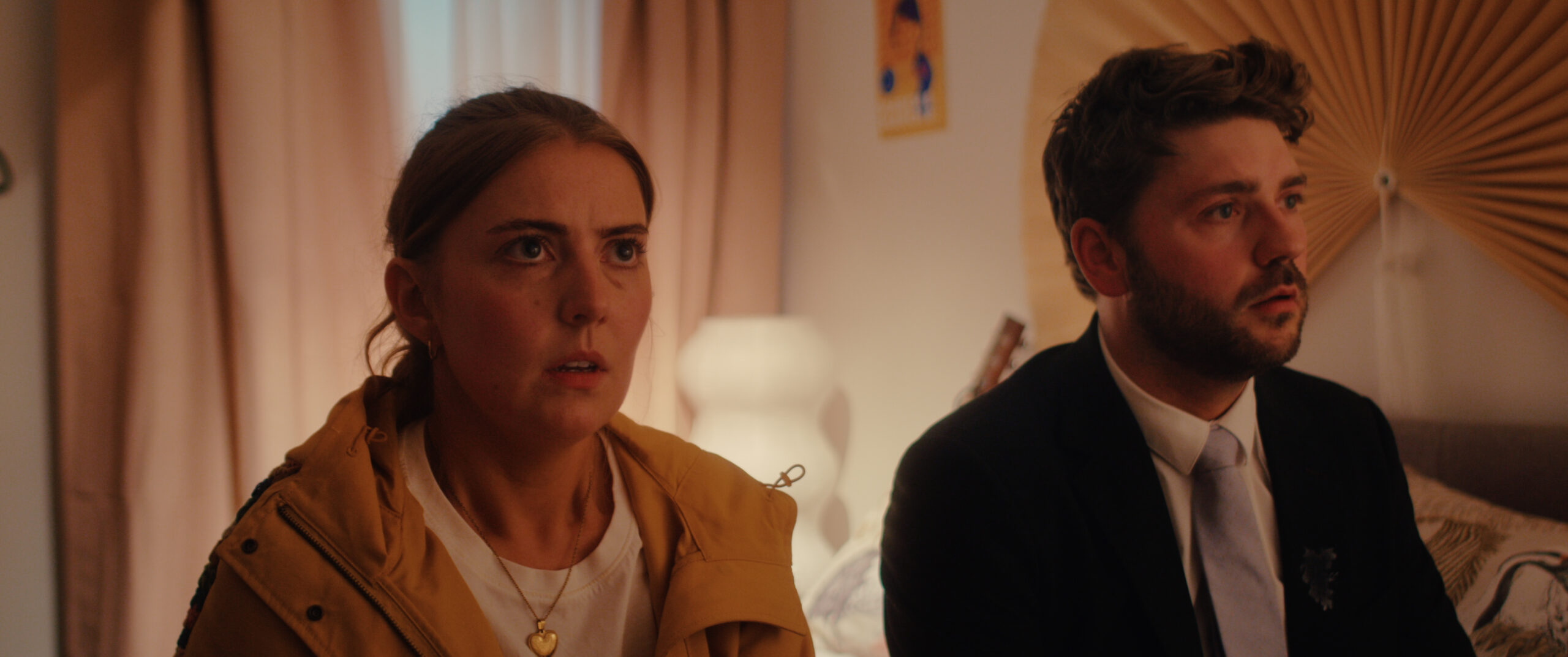
“Whatever it was that [James Rottger and Elle Watson] were doing with the script and with the characters, it just fit together perfectly.”
And then it was a case of, will they work together? So we did chemistry reads, we saw a variety of people who we’d called back and placed them in different pairings, and when James and Elle were together, they just worked.
I don’t know if I can necessarily describe why, but you got a sense of there being a tension there. I don’t even know how you’d define that tension. But it was kind of like the tension the characters have got, where it’s playful. I think they got that right away. But then in the quieter moments, they got how there was a connection between the two of them that would stem further. Whatever it was that they were doing with the script and with the characters, it just fit together perfectly.
SW: PREMATURE is going to be on the big screen. Why was it important to you the film gets a cinema release?
“I’ve always found the cinema is the place to watch movies.”
KW: Film is meant to be watched in the cinema. I don’t watch a massive amount of film at home. I’ll maybe watch stuff in bed at night, so probably something I’ve seen and I can drift off to. If I’m watching something at home, it’s usually for bonus features. I sit and pore through all the behind-the-scenes and all the deleted scenes.
I’ve always found the cinema is the place to watch movies. I don’t know if it’s maybe the ritual of it or if it’s the fact there are no distractions. I think it’s funny people say, “Oh, phones are so distracting”. I was on MSN for most of my teens, come on now. The distractions have been in young people’s lives forever.
There’s probably something semi-religious about the whole thing. I feel that you’re there to commune with people, with story. Part of religion is the telling of tales with morals and I think the same can be said about cinema.
So, the intention was always to, no matter how small, get it on cinema screens. And it’s just been a case of sheer determination and probably a little bit of delusion to get it to where we’re getting it now. I’m really glad that people can watch it in the cinema because I do think it is the best place to see any film.