
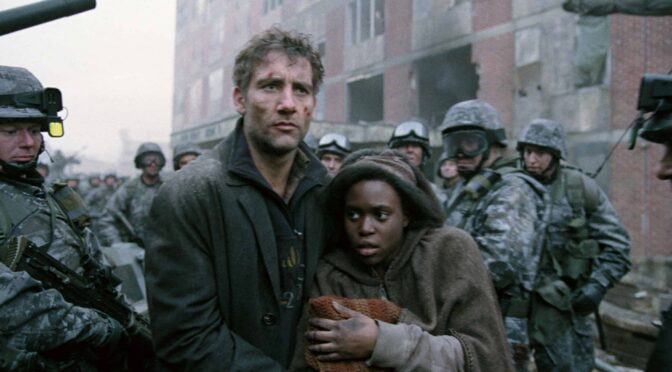
Twenty years ago, Alfonso Cuarón brought P. D. James’ dystopian novel CHILDREN OF MEN to the big screen. Now, as we approach the film’s 2027 setting, Cuarón’s imagining of a grim world racked not by a plague or natural disaster, but by human apathy, remains a fitting warning. CHILDREN OF MEN tells the story of a world where no child has been born for eighteen years, leaving humanity with no future generation to protect. While the root of humankind’s downfall remains far-fetched, the message of Cuarón’s film seems resonant in an era where hope for the future seems scarce.
At the film’s core, CHILDREN OF MEN is a movie about hope, yet its first act introduces us to a protagonist that appears entirely apathetic. Theo Faron (Clive Owen) is an exhausted bureaucrat in London. His days of activism are over. He’s resigned to a relatively stable but unhappy life. In the film’s opening scene, London mourns the death of the last human to ever be born. Theo doesn’t cry with the crowds. Instead, he grabs a coffee from a café, mixes in a splash of liquor, leaves for work, and then witnesses the café be destroyed in a bombing; a seemingly regular occurrence in the now totalitarian United Kingdom (though, at least according to the propaganda, the rest of the world has it far worse).
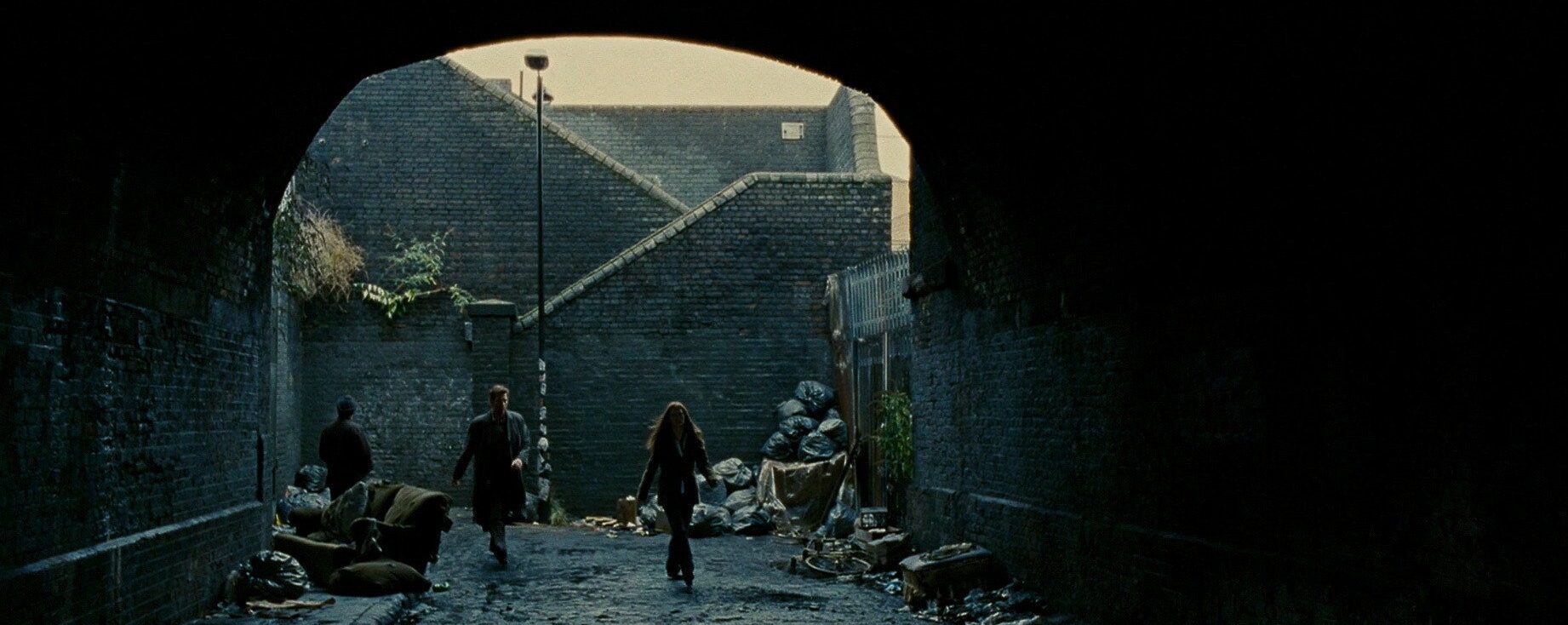
“While the UK labels all refugees as illegal immigrants, Julian fights to help Kee find safety and evade detention.”
While this grim world appears devoid of hope, Theo’s estranged wife Julian (Julianne Moore) and refugee Kee (Clare-Hope Ashitey) prove that humanity is still worth fighting for. As Theo’s foil, Julian is ambitious, energetic, and most importantly, hopeful. She leads the Fishes, a resistance group fighting against the oppression of the government. While the UK labels all refugees as illegal immigrants, Julian fights to help Kee find safety and evade detention. Her end goal is to deliver Kee to the Human Project, an organization dedicated to curing infertility. However, the existence of any sort of safe haven for Kee is a matter of faith. Until the finale of CHILDREN OF MEN (which strikes a perfect balance between ambiguity and resolution), both the audience and characters can only hope that the rumours about the Human Project are true.
Despite Theo’s involvement in this plan being the consequence of Julian’s pressure (bordering on coercion), and despite his utter lack of faith in Julian’s plan during the first act, Theo’s dedication in the following acts is what makes him a fascinating character. He’s three-dimensional. His apathy isn’t permanent. Neither is his estrangement with Julian. Kee becomes someone of whom he’s protective, rather than an inconvenience to him, and his mission takes him far from the comfort of familiarity. While Theo’s character arc is full of changes, his world-weariness persists, and thanks to Clive Owen’s subtle yet expressive performance, his unexplosive reactions make the quiet scenes just as dramatic and intriguing as the scenes riddled with gunshots.
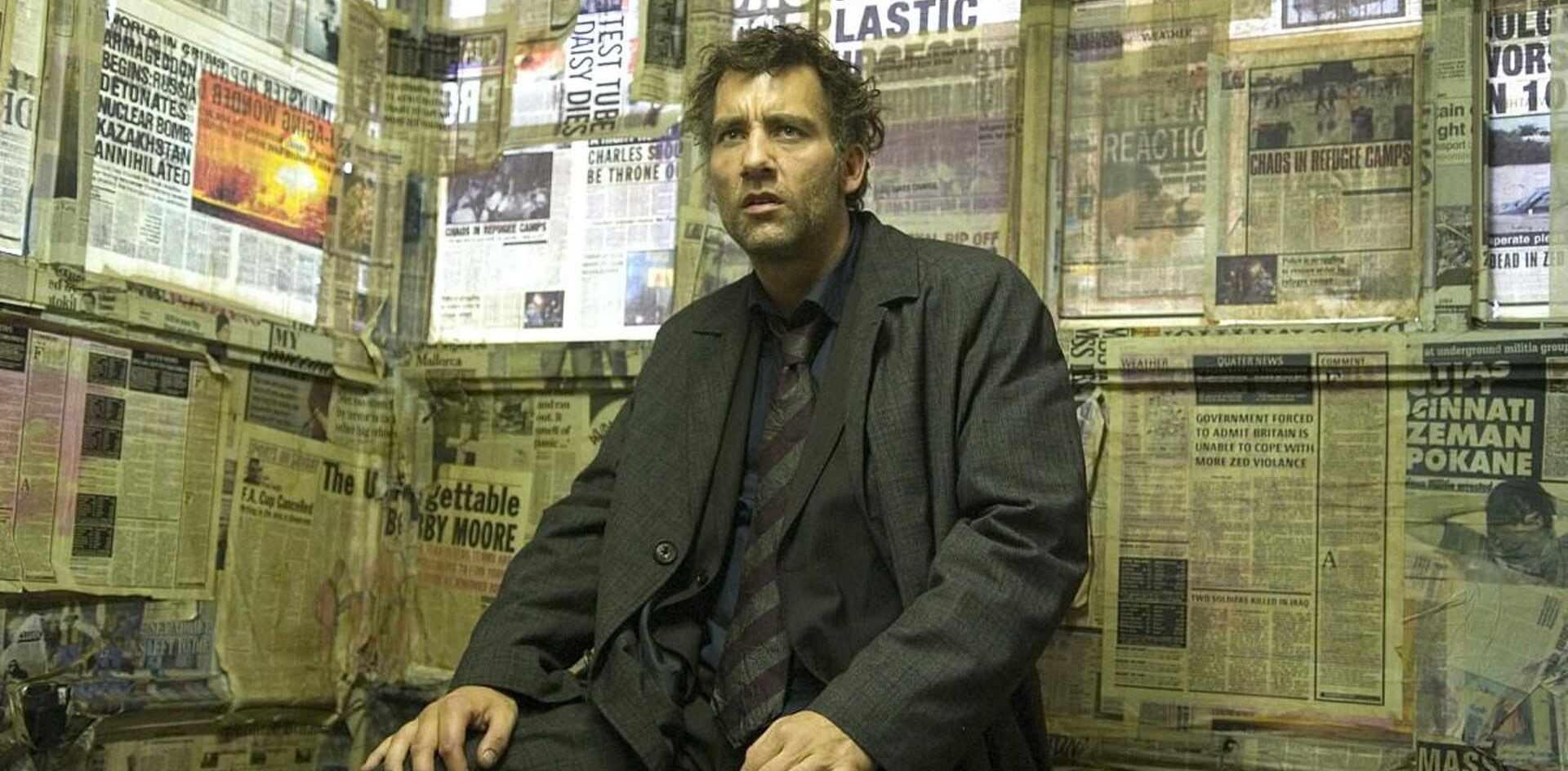
“[Theo’s] apathy isn’t permanent. Kee becomes someone of whom he’s protective, rather than an inconvenience to him, and his mission takes him far from the comfort of familiarity.”
The first act of CHILDREN OF MEN lets the audience question the importance of Julian’s mission. Cuarón delays the reveal of Kee’s pregnancy until a third of the way through the film, and in doing so, gives viewers deeper insight into Theo’s character. He has no clear reason to follow Julian, and while a piece of him wishes to return to normalcy, he never does. Again, Clive Owen allows the audience into his character’s psyche without any on-the-nose dialogue or actions. Additionally, Theo and Julian’s dynamic is refreshing, as it avoids the clichés of both an idyllic romance and a toxic and quarrelsome one. The two have clear differences, and yet there’s a flicker of happiness between them after they reunite. Rewatching the lighthearted moments the two share makes the transience of Theo and Julian’s reignited romance all the more heartbreaking.
Julian’s death is a major turning point in CHILDREN OF MEN. Occurring less than half an hour in, it proves that no character is safe. Many modern movies seem afraid to kill off their characters, but in CHILDREN OF MEN the characters prove their resilience to the audience, and do not survive because of plot armour. If Theo or Kee can be next on the chopping block as Julian was, then no happy ending is guaranteed.
Julian’s death marks a turning point in both the plot of the film and Theo’s character arc. Throughout CHILDREN OF MEN, Cuarón does an excellent job of establishing Theo’s perspective. Rather than rely on dramatic irony, he allows viewers to share Theo’s confusion, sadness, and anxiety as each piece of the puzzle comes together. Cuarón breaks the stereotype that action movies lack emotional depth, while simultaneously avoiding the clichés of mysteries and dramas. Questions about the Human Project and how the world fell apart arise naturally, rather than as the result of forced exposition. Any ambiguity in CHILDREN OF MEN is the result of Cuarón’s exclusive focus on Theo.
As the story progresses, the prevalence of specific motifs and symbols becomes ever clearer, and one such example is the appearance of animals. When Kee reveals to Theo that she is pregnant, she does so in a dairy barn, with the calves and their mothers symbolizing fertility. Not only does the prevalence of animals lead the audience to question why only humans have gone infertile, but it also plays into the religious themes of CHILDREN OF MEN. The barn scene is reminiscent of Jesus’ birth in Bethlehem, and Theo can be understood as a shepherd of sorts, as animals are quite fond of him. Despite his apathetic facade, the creatures recognize his tenderness and his capability as Kee’s loyal protector. Julian’s murder proves that both Theo himself and Kee are at risk, but throughout CHILDREN OF MEN, the knowledge of the latter is a far greater motivator for Theo. His self-sacrificing actions make him an admirable rebel, contrasted with the callous and xenophobic government.
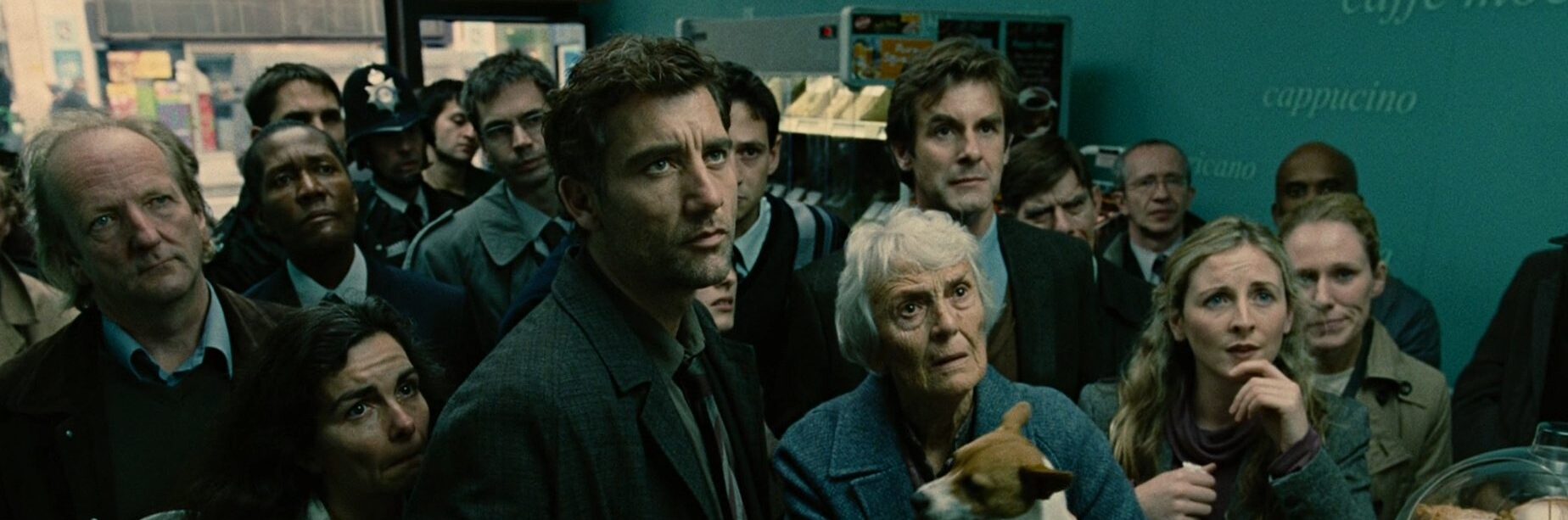
“[Theo’s] self-sacrificing actions make him an admirable rebel, contrasted with the callous and xenophobic government.”
Cuarón again uses symbology, though perhaps more subtly, when Theo, Kee, and Kee’s midwife Mirian (Pam Ferris) lay Julian to rest. The urgency of Theo’s mission is proven by the lack of any cuts during the scene. The time Theo has to mourn his wife is limited to the length of one shot, around 30 seconds. A tree divides the frame, just off-centre, separating Theo from Miriam and Kee. This barrier highlights the differences between Theo and Kee, the challenge of safely avoiding separation, and Theo’s own psychological detachment. Julian was the link between Theo and Kee, and now this link has been severed. However, even before Theo fully comprehends the importance of his mission, the empathy beneath his rough exterior leads him to care for Kee, respect Julian’s wishes, and carry on her legacy as a catalyst for change.
Throughout CHILDREN OF MEN, Theo continues to act as a shepherd and protector. Kee remains a beacon of hope in a world devoid of it, and her baby acts as an effective stand-in for the Messiah. Despite being a brief remark, Kee even jokes that she’s a virgin. The film ends on a bittersweet note as Kee cradles her baby after the previously apathetic Theo has done everything in his power to save her from the harsh world, to which she will one day bring hope.
CHILDREN OF MEN’s final act demonstrates the power of hope and legacy, a crucial wake-up call in a world where a future generation exists, and yet faith in it seems to be lacking. Cuarón is never preachy, but his warning is clear; apathy took the place of a literal plague. The world will only improve when the youngest generation is treasured and supported. However, even in the darkest of times, the noble, represented by Theo; the nurturing, represented by Kee; and the future harbingers, represented by Kee’s daughter, can be beacons of light.
INCREDIBLE WORK!!!
Amazing, absolutely amazing . Sucked me in with the first few words. You should make more!!! Yay