
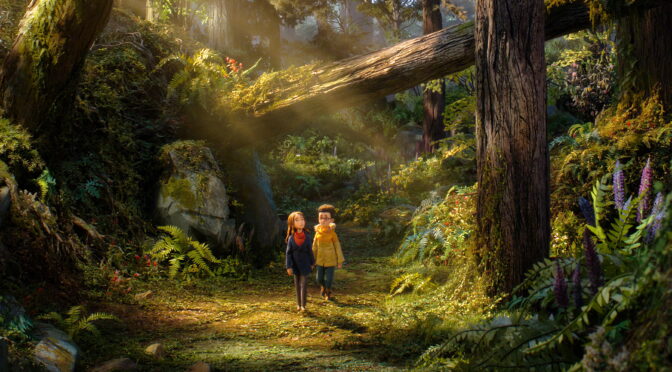
 WILDWOOD, the latest tribute to stop-motion animation from studio Laika, comes in the ambitious form of around 136 practical sets, over 1000 creative artists, and more than 142,000 3D-printed, bespoke replacement faces across more than 200 handcrafted puppets.
For its sixth feature film release, CEO and Laika President Travis Knight returns to the director’s chair, alongside a firm favourite of Laika’s writing team, Chris Butler, on the screenplay. The story is adapted from Colin Meloy’s bestselling 2011 novel of the same name and explores themes of family, grief, ambition, and conflict. With previous releases such as CORALINE and KUBO AND THE TWO STRINGS, Laika titles have been acclaimed for their authentic craftsmanship, commitment to breaking the boundaries of stop-motion animation, and, more importantly, authentic, human filmmaking.
Set in Laika’s own home of Portland, Oregon, WILDWOOD follows Prue McKneel (Peyton Elizabeth Lee) in her desperate pursuit to rescue her little brother after he is stolen by a Hitchcockian murder of crows and taken into the Impassable Wilderness. With a strong sense of self-will but stranded between her pre-adolescence and desire to journey into adulthood, Prue, along with her hapless friend Curtis (Jacob Tremblay), must confront a world of bandits, humans and anthropomorphic animals. Once believed to be made-up fairy stories, the fragile balance of this new realm soon becomes a reckoning force in the mission to rescue her brother as well as the future of this newly discovered world.
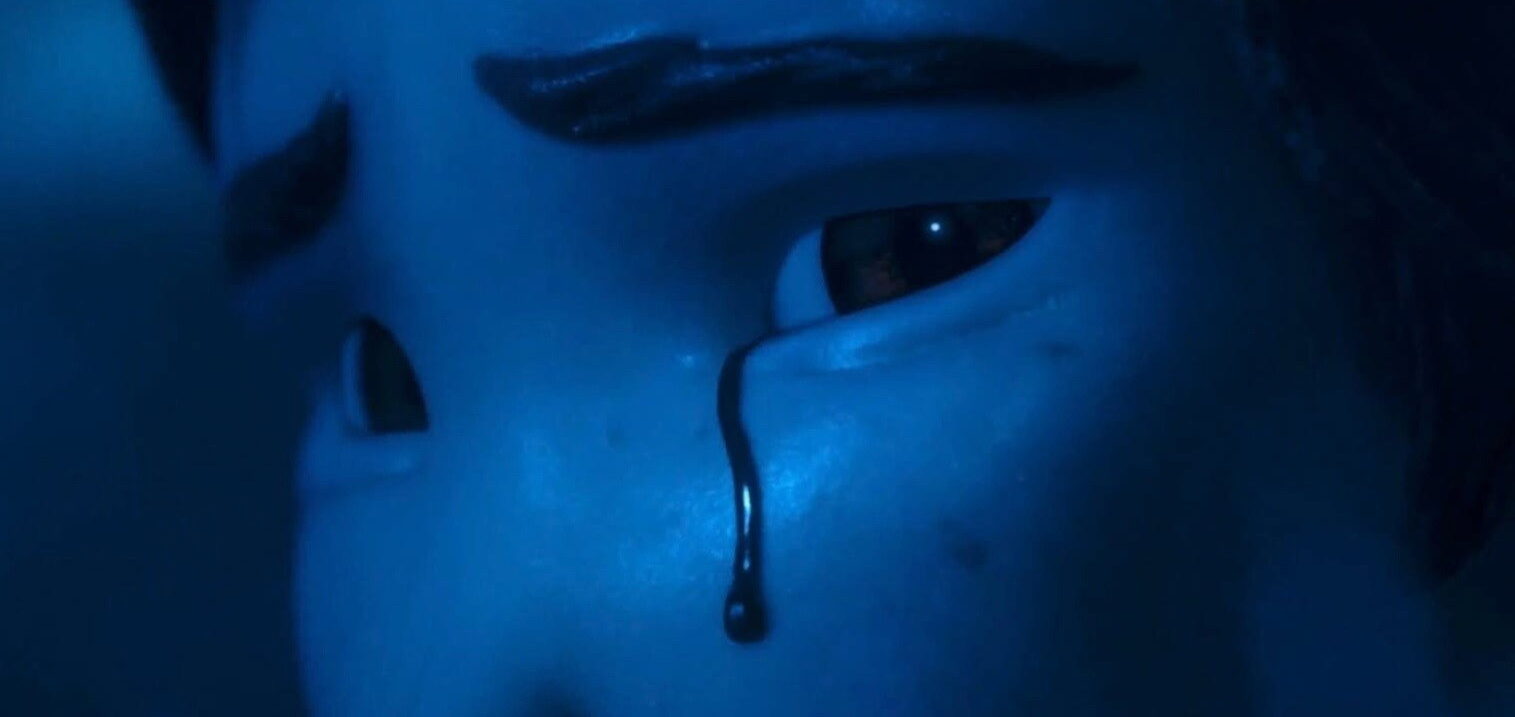
“WILDWOOD is comfortably the longest-running stop-motion feature in history, but a strong understanding of pacing and carefully positioned twists means the length of this film is not only barely noticeable, but encouraged.”
Sitting at a runtime of 132 minutes, WILDWOOD is comfortably the longest-running stop-motion feature in history, but a strong understanding of pacing and carefully positioned twists means the length of this film is not only barely noticeable, but encouraged. The film’s conceptual neatness is enforced by a strong, emotionally driven storyline wherein the growth of both the narrative and the characters provide consistent, engaging viewing. From beginning to end, the narrative tempo is continually gripping both visually and emotionally. Whilst elements of the story can be compared to pre-existing screenplays such as Jim Henson’s LABYRINTH, these are intertwined with relatable modern-day themes that Knight employs to formulate a new adventure.
WILDWOOD opens with darker themes in comparison to that of previous Laika tales as we first see a young boy jump to his death from a castle balcony while his mother weeps behind him. The boy’s insides are revealed to be made of cogs and mechanics, a shocking discovery to the characters surrounding the body and the first of many odes to the filmmaking techniques which build this world. The film continues to utilise more sinister themes the deeper into the woods it goes, with brutal and visual displays of loss and death throughout. In particular, the epic battle sequence in the final act of the film provides a ruthless display of conflict which could be compared to battles from other literary worlds such as C.S. Lewis and J.R.R. Tolkien. The vast scale of this scene is beyond impressive and creates a climactic sequence that leaves audiences on the edge of their seat.
As well as this, WILDWOOD also displays moments of great beauty such as the flight of the eagle sequence, in which Prue, escaping on the back of The General (Angela Bassett), takes to the skies for a brief moment of serenity. This grand display of puppetry is breathtaking in every form, from the individually placed feathers to the notable tight grip and tension of Prue’s hands as she holds on. As she looks between the clouds, Prue closes her eyes and truly feels the magic of the world that she has fallen into. We see the character in a pure form, a girl who is simply willing to do anything to get her little brother back, but also still a child herself.
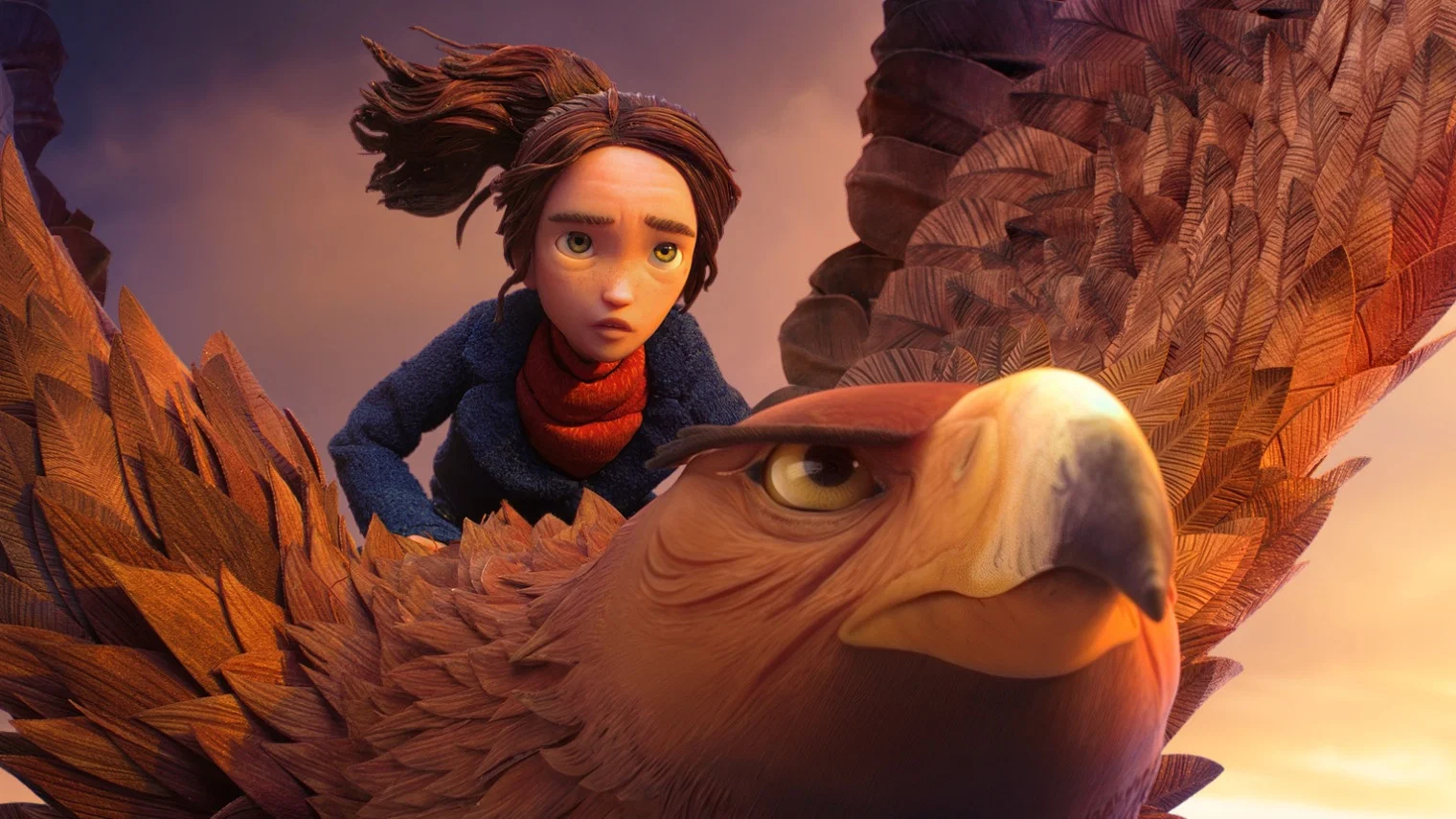
“WILDWOOD also displays moments of great beauty such as the flight of the eagle sequence, […]. This grand display of puppetry is breathtaking in every form…”
Prue McKneel harbours nearly all the stereotypes of your typical headstrong heroine; she doesn’t follow rules, she’s lost her faith in magic, and she feels she is ready to grow up and face the world alone. All of these traits create a rebellious and determined main character who can carry the story through the initial acts with ease; however, the occasionally repetitive teenage angst aspects of Prue feel similar to existing heroines and lack some originality. The opposing antagonist is the anti-villain of Alexandra (Carey Mulligan), who, after the death of her son, is left blinded to anything but revenge. Her complex portrayal of grief and the inability to let go drives the thematic tensions throughout the narrative, as well as playing a large part in Prue’s emotional development throughout the course of the story.
Laika is well known for its imagination and scale when it comes to world building within its films, and WILDWOOD is no exception. Initially, the film tackles realism and realistic settings with the recreation of the neighbourhoods of Portland, Oregon, paying tribute to iconic landmarks of the city such as bookshops, parks and historical signs; however, after Prue’s brother is taken, the majority of the narrative then continues to unfold within the extensive, fantasy locations of the Impassable Wilderness. Once within the woods, each new set of characters then brings with them a new visionary pocket of this expanding world, such as Pittock Mansion and the coyote warrens. This gives the impression of a vast and immersive world that grows in parallel with its narrative. As well as the realistic locations, the film’s cast of puppets present a visually stronger sense of human realism, particularly in comparison to that of the caricature styles previously seen in the likes of THE BOXTROLLS. When presented in opposition to the fantasy of the WILDWOOD forest, this helps to develop a clean fluency between these two different worldly aesthetics, cementing the variety that stop-motion can produce.
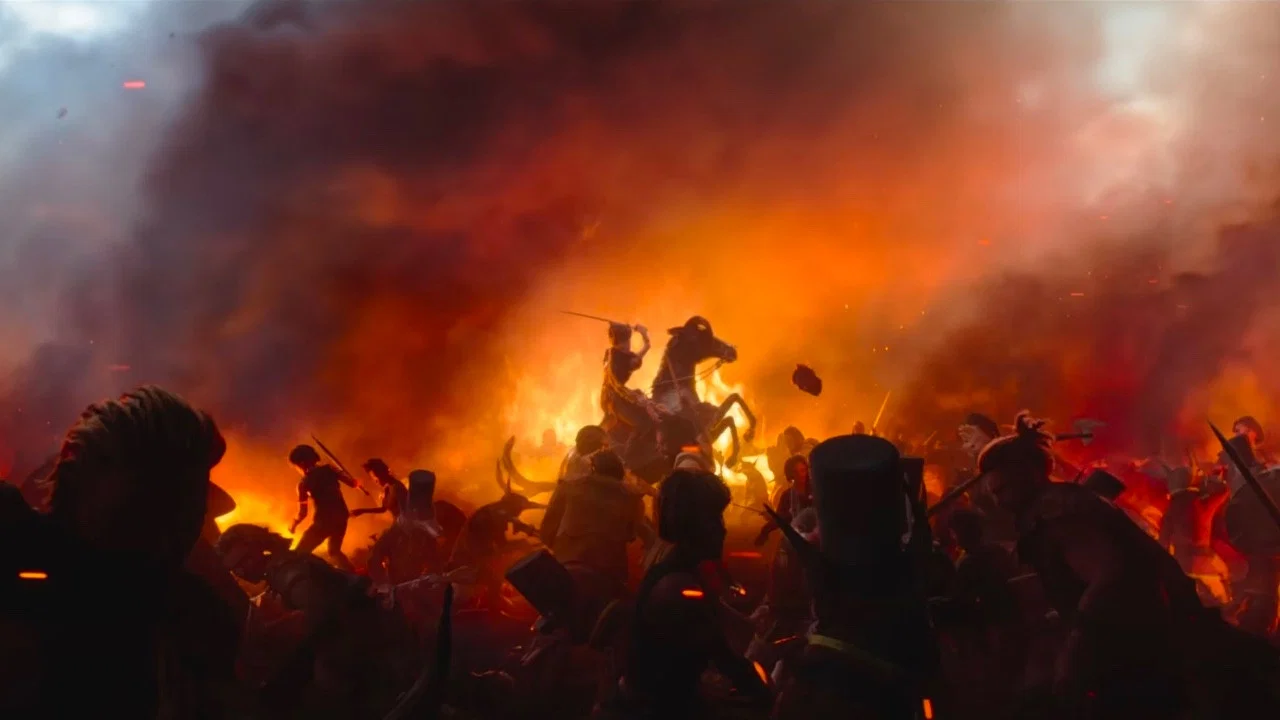
“…the knowledge that each piece is being moved so intentionally by hand to build the moving image augments a natural authenticity in the viewing of even the simplest of scenes.”
Stop-motion animation is instrumental in the creation of these immersive and magical locations, as the medium naturally lends itself to tangibility. As well as this, the knowledge that each piece is being moved so intentionally by hand to build the moving image augments a natural authenticity in the viewing of even the simplest of scenes. This feeling of purposefulness carries from frame to frame with every moving leaf and every climbing vine; an audience has an understanding of the deliberateness behind it. Environmental aspects such as plants and trees are thus given a kind of personality that otherwise only characters are provided with, and quite literally in WILDWOOD’S case, everything feels as if it has come alive. The level of depth on-screen that this evokes is something harder to produce with other filmmaking styles.
With all of this said, once the scale of the commitment and craftsmanship that performs alongside the film itself is understood, as wondrous as this is, it is important to be able to separate the mightiness of the technical aspects from the other elements that make up the feature as a whole, such as narrative comprehension. Whilst the stop-motion style is impressive, it needs to lend itself to the given narrative rather than cover up for weaknesses. In this case, WILDWOOD has successfully combined both a strong story and an extraordinary technical skill to create an effective cinematic experience.
An authentic, hand-crafted understanding of emotional storytelling, WILDWOOD is a successful tribute to stop-motion animation and a demonstration of the continuous ambition, imagination, and time that it takes to harness this filmmaking technique. By utilising fantastical stories and intricate characters the film allows audiences to experience and engage with worlds that are, in reality, so small but feel so boundless.