
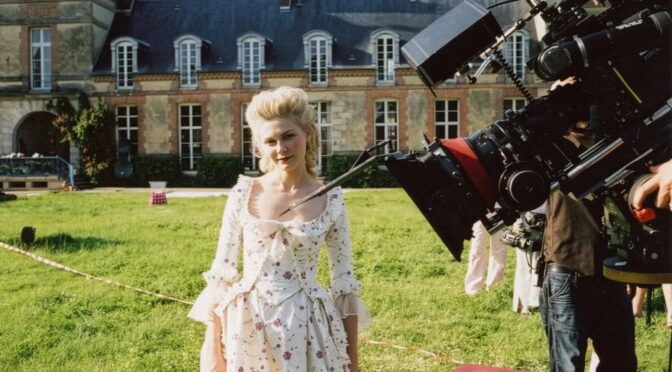
 This on-set footage of MARIE ANTOINETTE’s production provides a unique insight into the arduous process of making an ambitious period drama. Focusing on this landmark in Sofia Coppola’s career, her mother Eleanor’s lens and narration has a full spectrum of emotions: sympathy, concern, jealousy and inspiration, all wrapped together into this exciting portrait of a family of filmmakers.
Now being shown twenty years after the 2006 release of Sofia Coppola’s radical biopic, MAKING MARIE ANTOINETTE is a documentary filmed on set by Sofia’s mother. Eleanor Coppola, who passed away a few years ago, began rifling through her hours of footage during the pandemic, and, in her honour, the project has been completed with a voiceover quoting her diary.
In an industry landscape where female directors are still fighting for recognition, witnessing Sofia Coppola drive such an ambitious, complicated American-French production (far bigger than her previous projects) is deeply inspiring. She is polite and petite compared to her crew members, but she holds firm with her artistic choices. For instance, when executive producer Francis Ford Coppola (also her father) and her DP wonder why she isn’t filming Louis’ perspective in one scene, she insists that it is an unnecessary diversion from her story to seek his vantage point.
As Sofia leads with the philosophy to deal with doubts head-on rather than regret lazier choices later, this leads to certain tensions, especially on such an expensive set, where costume changes can take hours between scenes. But the results speak for themselves: twenty years on, MARIE ANTOINETTE is known for its meticulous production design and unique vision, while the pastel palette and anachronistic costuming and music choices have been imitated by the likes of Bridgerton.
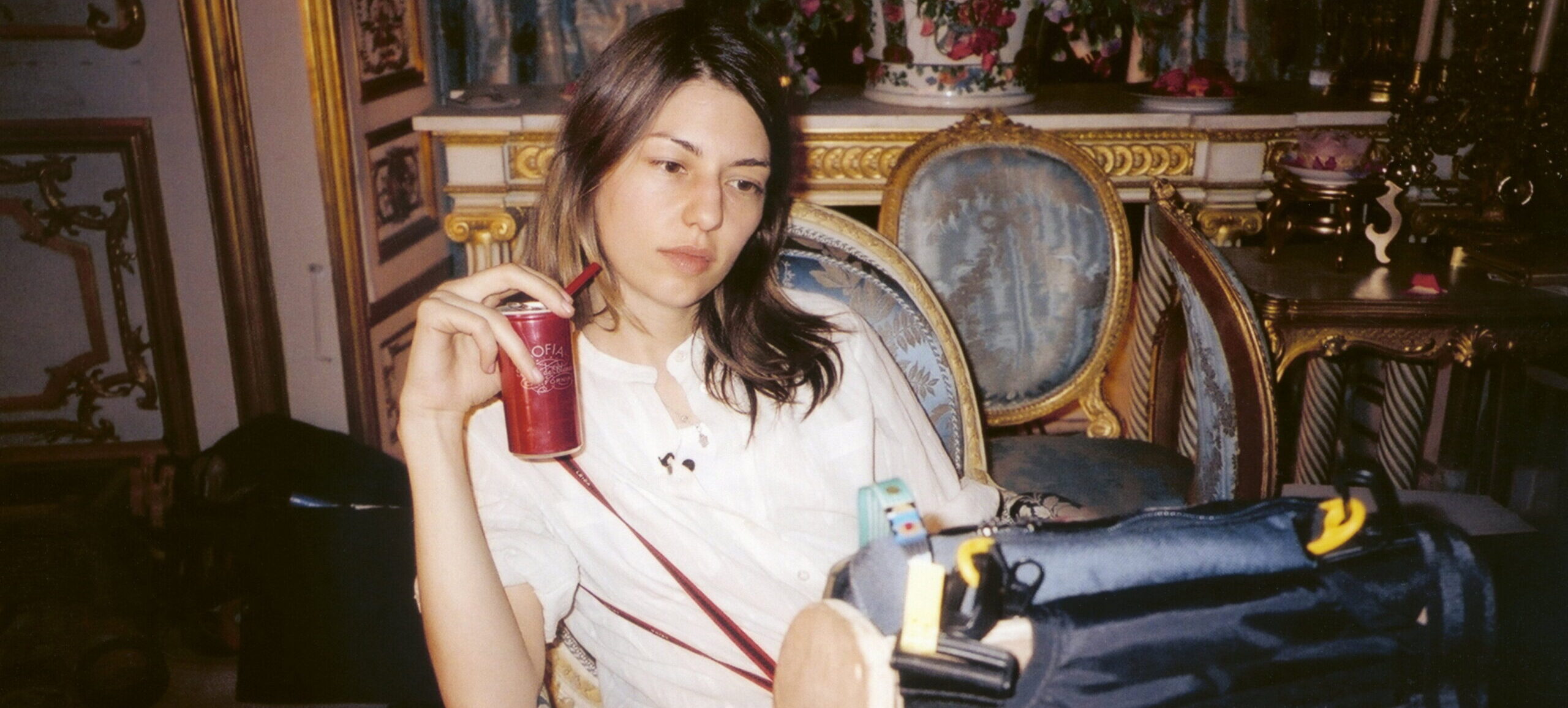
“While director Sofia, and her star Kirsten Dunst, take up as much space as possible, our filmmaker Eleanor makes herself, as she says in her diary, as invisible as possible.”
While director Sofia, and her star Kirsten Dunst, take up as much space as possible, our filmmaker Eleanor makes herself, as she says in her diary, as invisible as possible. A few alternative shots, and glimpses in the mirror see her dressed entirely in black, her arm and shoulder aching from the huge camera. Through her lens, you can see how much she is intent on absorbing this once-in-a-lifetime opportunity. This impacts her and her film in several fascinating ways: she ruminates on the fitting nature of the narrative; how Sofia is a young woman with her father’s legacy on her shoulders; and Kirsten, who is in almost every single scene of the 52-day-shoot, and Sofia both seeing themselves in the young pressured Marie.
Eleanor also positions herself as more of an outsider. While she is a Coppola, she married into the family, and wonders at how the world of Hollywood, which was so exotic in her youth, has become a Friday night activity for her household. The nepotism is undeniable within the cast and crew: Jason Schwartzman who plays Louis is Sofia’s cousin, while her brother Roman heads up direction on the second filming unit. But there is a charm in this being a family affair, as every individual feels dwarfed by such an immense production. In Jason’s case, he is put at ease by Sofia reminding him of memories to channel his performance. Meanwhile, Sofia herself, who gets bronchitis just five days into the shoot, looks exhausted, and is reassured by Roman’s support: “their [sibling] relationship is one of the most profound treasures of my life”, the diary iterates.
Intergenerational reflections make this documentary especially beautiful, again considering how young Marie Antoinette was married off as a teenager and pressured to produce an heir. Eleanor, who says she had three children by the time she was Sofia’s age, describes her experience of witnessing the evolution of women having both careers and family. There is a resentment that she has been in the background while her husband and children make movies, but seeing her daughter work so hard and thrive leads to a late-in-life realisation, that she can make up for lost time, and indeed, after filming this, Eleanor Coppola went on to film more movies. Another loss before the release of this documentary is the death of Marianne Faithful last year, who plays Marie’s mother. In between takes she jokes and imparts advice from a lifetime of excitement and mistakes to Sofia. Between her and Eleanor, one feels that in the edit, this is a tribute by Sofia to maternal wisdom as it is to its original subject.
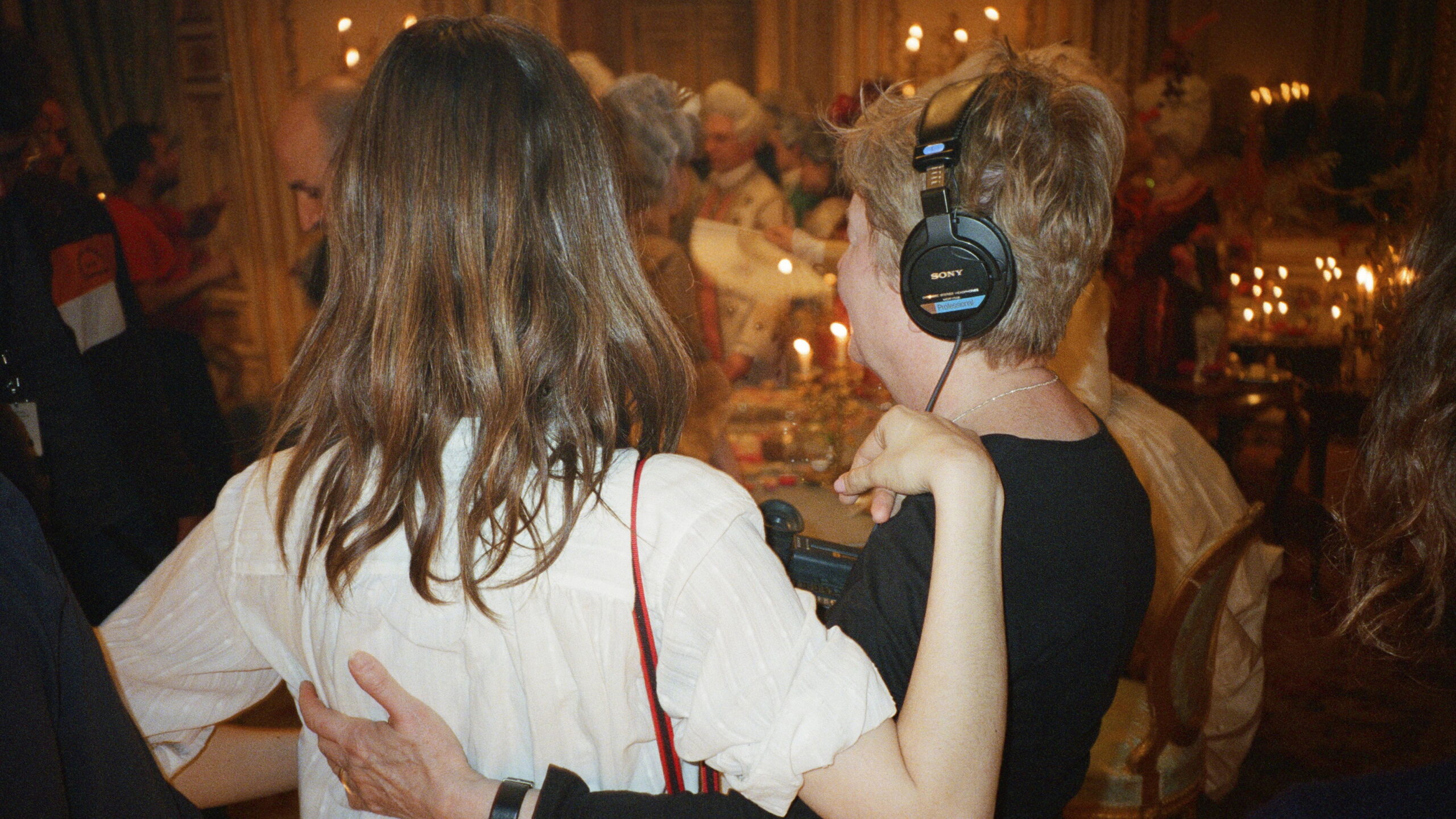
“Eleanor, who says she had three children by the time she was Sofia’s age, describes her experience of witnessing the evolution of women having both careers and family.”
The limitations of MAKING MARIE ANTOINETTE are it takes place when a lot of the work has already been completed: in particular, Eleanor is fascinated by the enigmatic Milena Canonero, the costume designer who made hundreds of gowns for the film. The film skips the truly admirable achievement of how Sofia Coppola convinced the French government to allow her to film at Versailles in the first place. One also has to watch MARIE ANTOINETTE to see which of the numerous takes made it into the film, but the iterative process, with the unique on-set advisors is incredible. Two etiquette experts are needed to really nail the process of all those ladies-in-waitings bowing next to Marie’s bed. The 90 minutes are absolutely packed with exquisite details like this, and Eleanor has an eye for these little moments.
MAKING MARIE ANTOINETTE is a warm, sympathetic documentary, guided by curiosity and a mother’s instinct, punctuated by gems of wisdom from the diary. Everyone is proud of their part in this behemoth film, and it all feels appreciated, from the wig-makers who take a minimum of 90 minutes to dress even the most minor of extras, to the insane picturesque elements of the feast which are all actually edible. It is a privilege to be allowed into the fold of this Hollywood family and set, and MAKING MARIE ANTOINETTE should serve as a case study for the talents of female directors. The film should be sent to the Apple executives who turned down Sofia Coppola’s production of The Custom of the Country in 2024, a headline which proved that even decades later, a woman with her impressive filmography and connections still has to fight to make the projects she wants.