

Reflecting on The SOCIAL NETWORK sixteen years after its release, David Fincher and Aaron Sorkin’s collaboration has aged in complex and interesting ways as the influence of the film’s subjects has grown. Sorkin returns to the subject as writer-director with THE SOCIAL RECKONING and Jeremy Strong taking over as Mark Zuckerberg, with the narrative focused on The Wall Street Journal publication of The Facebook Files. Although the film clips along as an entertaining journalism drama, it suffers from Sorkin’s desire for triumphant moments, a miscalculated score, and courting comparisons with THE SOCIAL NETWORK.
Frances Haugen (Mikey Madison) is a Facebook employee in their Civic Integrity team, disturbed by the role the site seems to have played in the radicalisation of an old acquaintance. The acquaintance rants drunkenly at police officers, in a video posted to an alt-right group, before overt racism towards the Black and Hispanic officers, and claiming she is being arrested “in America for being American”. After uncovering worrying evidence of the social network’s role in such cases, and other injurious effects on users they have ignored in pursuit of profit, Frances takes her information to the Wall Street Journal’s new tech-averse Facebook correspondent, Jeff Horwitz (Jeremy Allen White). The film jumps back and forth between their first contact in 2019 and Mark Zuckerberg (Strong) preparing for a congressional hearing in early 2021.
Most characters get a memorable moment without sounding like a Sorkin avatar, something which his least elegant work has sometimes fallen prey to (such as The Newsroom). Mikey Madison, in particular, successfully embodies Frances’s conflict at believing in the Facebook ‘mission’ (repeated many times in a way that beautifully highlights the cult-like nature of Silicon Valley lingo) but growing disgust at the way it has been perverted.
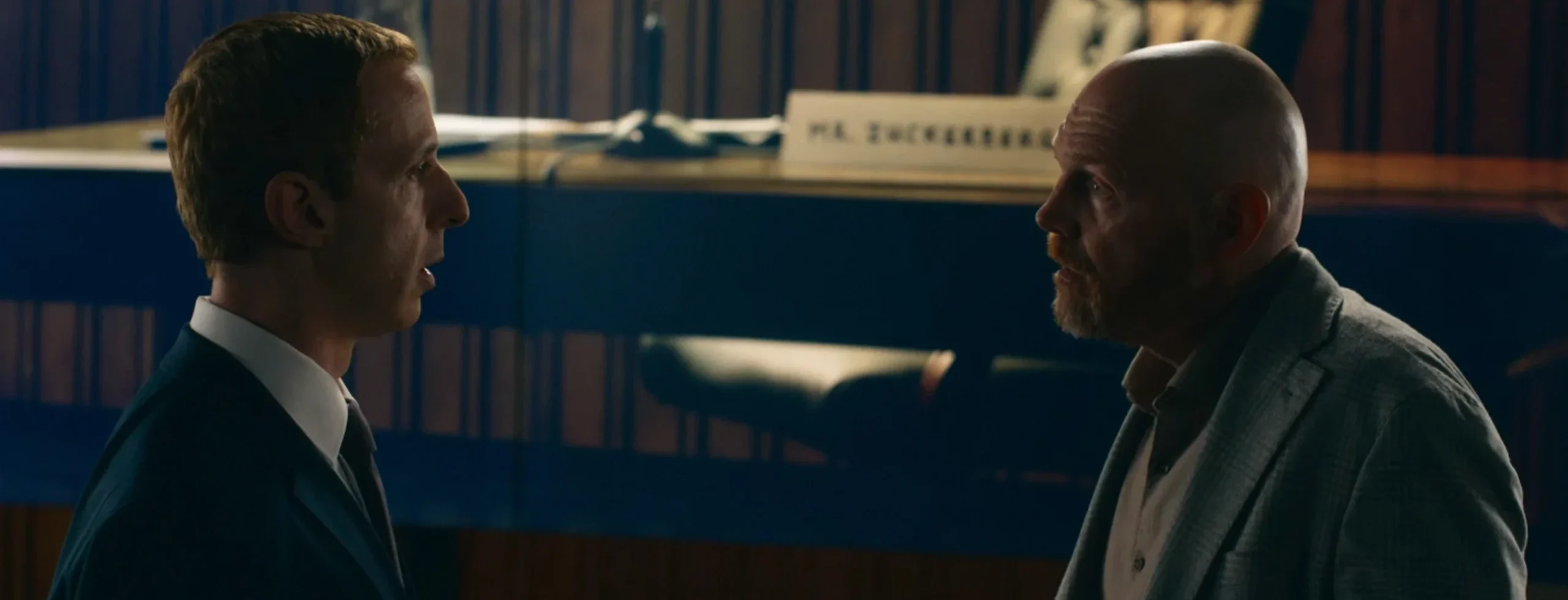
“…the most memorable moments arguably belong to comedian Bill Burr in a supporting role…”
However, the most memorable moments arguably belong to comedian Bill Burr in a supporting role as Charlie Garrigan; a Facebook investor who Zuckerberg distrusts as a result of an op-ed he wrote, but is nevertheless brought into his hearing preparations. Burr’s delivery and frustration with Zuckerberg’s almost amoral inaction on fact-checking political advertising reflects the annoyance of the audience with Zuckerberg, and the contrast between Zuckerberg’s slippery evasions and Charlie’s persistence is superb to watch. Strong’s portrayal of Zuckerberg is satisfying, if less subtle, than Eisenberg’s in THE SOCIAL NETWORK. Strong amps up the robotic nature of the Meta CEO (at one point needing to be taught how to nod) but it’s fair to say he is playing the Zuckerberg we are publicly familiar with.
“…the film is less interested in the nature of Facebook’s transgressions than it is in how we hold powerful people and companies to account. The clearest echoes are not THE SOCIAL NETWORK, [but] ALL THE PRESIDENT’S MEN, SPOTLIGHT [or] THE INSIDER.”
The film focuses a huge amount on the process of investigative journalism, and the core of the film is the growing trust between Jeff and Frances as he develops her as a source. In this respect, the film is less interested in the nature of Facebook’s transgressions than it is in how we hold powerful people and companies to account. The clearest echoes are not THE SOCIAL NETWORK, but films like ALL THE PRESIDENT’S MEN, SPOTLIGHT or – the most apt, given the whistleblower angle – Michael Mann’s THE INSIDER. Whilst the film retains most of the dialogue strengths of Sorkin’s best work, it’s the comparison to these films which leave the film feeling more inconsequential.
The film attempts to be hopeful by the end, but its desperate attempts for catharsis make it surprisingly toothless (not to mention the ramifications of Haugen’s leaks and Meta’s actions will have a long tail, and are still playing out in 2026). This is no more clear than in the film’s bizarre disinclination to mention Donald Trump by name during a depiction of Facebook and Zuckerberg’s response to the January 6 Capitol attack. Many liberal commentators have taken the route of not naming Trump at various stages of his presidencies, but it has never felt more inauthentic than Sorkin’s script here, and obfuscates the very real-world consequences the film wants to highlight.
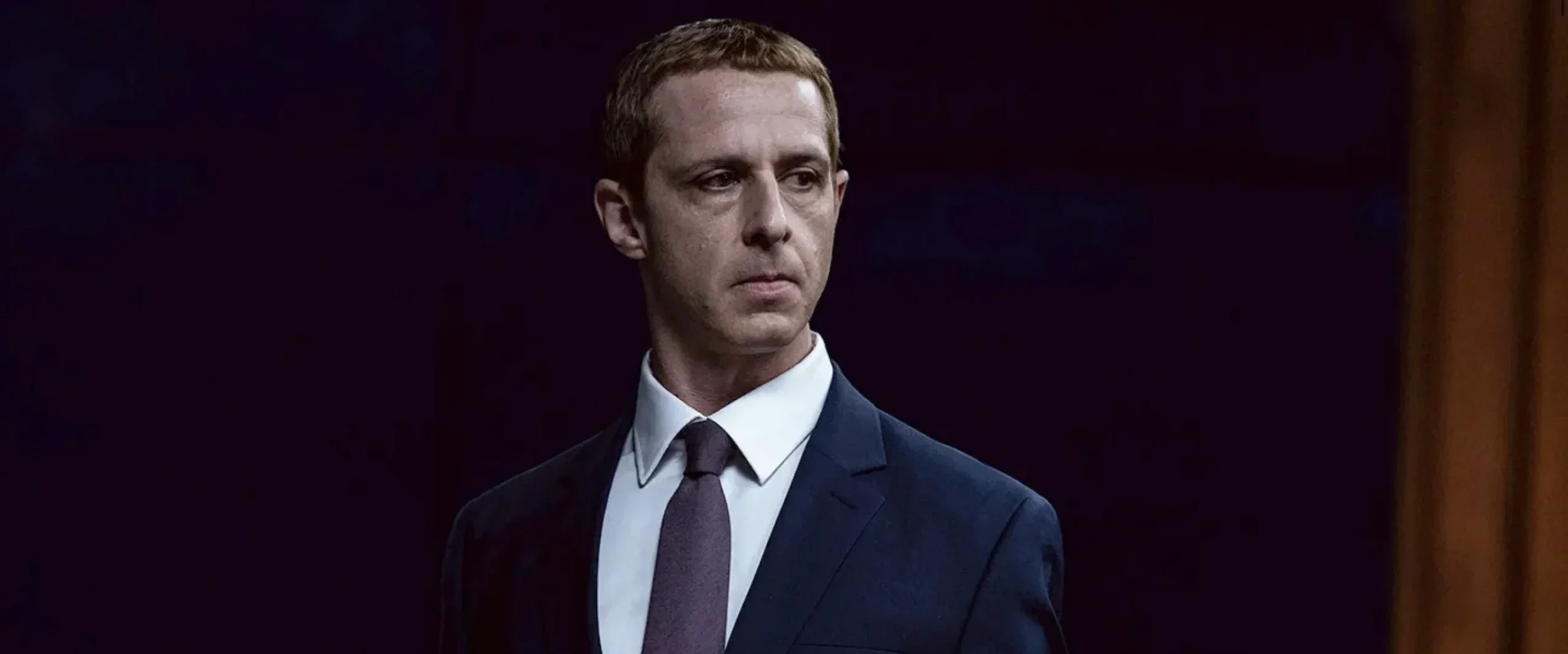
“The film attempts to be hopeful by the end, but its desperate attempts for catharsis make it surprisingly toothless…”
Aaron Sorkin is a less distinctive director than David Fincher, but this would be an unfair comparison when THE SOCIAL RECKONING is a handsome-looking film (sharing a cinematographer with THE SOCIAL NETWORK in Jeff Cronenweth), if less inventive regarding overall mise-en-scène. However, there are other technical elements which hinder the film. Alexandre Desplat, as wonderful a composer as he is, feels like the wrong choice for this material. The intricate and waltz-like nature of Desplat’s work imparts an elegance and hopefulness to proceedings that feels at odds with the cold and calculating nature of Facebook’s lack of humanity in its decision-making. At the film’s conclusion, this musical approach compounds with Sorkin’s visual and narrative instincts to create false satisfaction. On top of the score, the time-jumping nature of the screenplay serves little purpose besides parcelling out Strong’s performance, setting up the strangely stand-offish January 6 segment and confusing causal links.
“More than anything else, the film’s hopeful final note feels disingenuous.”
More than anything else, the film’s hopeful final note feels disingenuous. In the film’s desire to highlight the bravery of Haugen’s actions and the righteous tenacity of Horwitz, Sorkin’s script and overall approach are determined to finish on an inflection point; to find some sort of turning point where the balance of power has shifted. In 2026, market capitalisation of Meta Platforms is now about twice of what it was just before the publication of the reporting the film depicts. The film’s own bleak ending text statements on Facebook’s approach to fact-checking and how many adults get news from the site is at odds with its concluding tone. That reach for positivity is also in opposition to the most successful examples of the genre like THE INSIDER. Far from winning the war, the battle depicted has barely begun.
THE SOCIAL RECKONING is an absorbing look at the process of airing Big Tech’s dirty laundry. However, in its desire for catharsis and heroes the film itself reckons with very little. The film stares into the algorithmic abyss, blinks, and looks away.