
 SORRY TO BOTHER YOU roared onto screens in 2018, with Boots Riley deploying dense and absurdist comic metaphors to examine the effects of capitalism on society. The focus of I LOVE BOOSTERS feels fuzzier. However, the film maintains an acerbic, colourful approach and witty dialogue that demand action now by bringing hypocrisy and near-comical injustice into sharp relief.
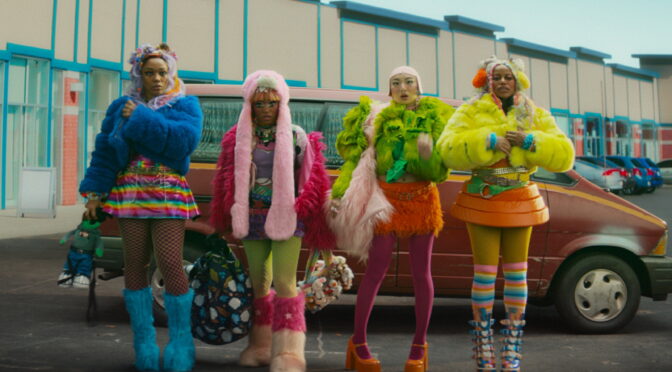
Keke Palmer leads the cast as Corvette, part of a crew of ‘boosters’ stealing clothing designed by Christie Smith (Demi Moore) under the brand Metro from stores, before reselling them on the cheap. She harbours ambitions of fashion design herself, but has to make ends meet by squatting in an old chicken restaurant. In their attempts to get ahead, her friend and fellow booster, Sade (Naomi Ackie), also tries to convince her to sign up to a pyramid scheme run by ‘Dr. Jack’ (Don Cheadle). The film also brings in strands related to the manufacture of Metro’s pieces in China, collective worker action, and a curious attractive stranger, played by LaKeith Stanfield.
In the vein of Riley’s previous feature, there is a bold surrealist edge to I LOVE BOOSTERS. A massive ball of jumbled bills and other anxieties appears to Corvette as a recurring motif. The ball’s appearances have a stop-motion or miniature quality to the shots (a visual approach which recurs later in the film, with some eccentric sequences having a Harryhausen-inspired feel to them). The more bizarre elements of the script rack up: a mysterious subplot involving expensive ‘suits’, Don Cheadle’s fantastically humorous performance as a self-help guru, and LaKeith Stanfield’s stranger.
“A film replete with literal colour refuses to trade in thematic black and white; clean visual lines bring clarity to issues that don’t have such apparent contrast.”
A number of these are partially lost in the mélange, but even Stanfield’s role (the most disconnected from the film’s main thrust) delivers memorable comedic moments and a committed performance. A plot machination involving a handheld sci-fi teleportation device leads to an extremely inventive chase sequence that is more engagingly dynamic than any social satire has a responsibility to produce. The film takes on many of these outlandish elements early in the story and starts to diffuse its focus, but every outrageous embellishment in the script or plot serves to drive attention to analogous scenarios in the modern capitalist world.
This scatter of ideas means the satire doesn’t always land neatly, but always does so with impact (especially as the wildest elements ramp up in the film’s final stretch). For instance, a notable sequence with Will Poulter (playing a Metro Designers branch manager, Grayson) ridicules LinkedIn-style corpospeak, worker exploitation, and business’s bastardisation of modern therapy speak within a single monologue. It’s a blunderbuss critique, but the message is funny and clear.
I LOVE BOOSTERS displays the same irreverent sense of humour as SORRY TO BOTHER YOU, refracting class strife, economic disparity, and global worker solidarity through its chosen fast-fashion lens (one inspired by the identically named track I Love Boosters by Riley’s hip-hop group The Coup). Demi Moore’s Christie is a fashion tycoon, but the character has similarities with tech moguls more openly lampooned in SORRY TO BOTHER YOU. I LOVE BOOSTERS shifts the caricature, with greater emphasis on behaviours that have taken hold of business leaders in the 2020s, such as the tone-deaf self-aggrandisement of AI CEOs like Sam Altman, or the social media bolshiness of Elon Musk.
“…the lack of nuance is made up for with the confidence of the creative team’s vision. Indeed, one of the most engaging and cathartic lines the film states repeatedly in dialogue is “this is not the time for nuance”.”
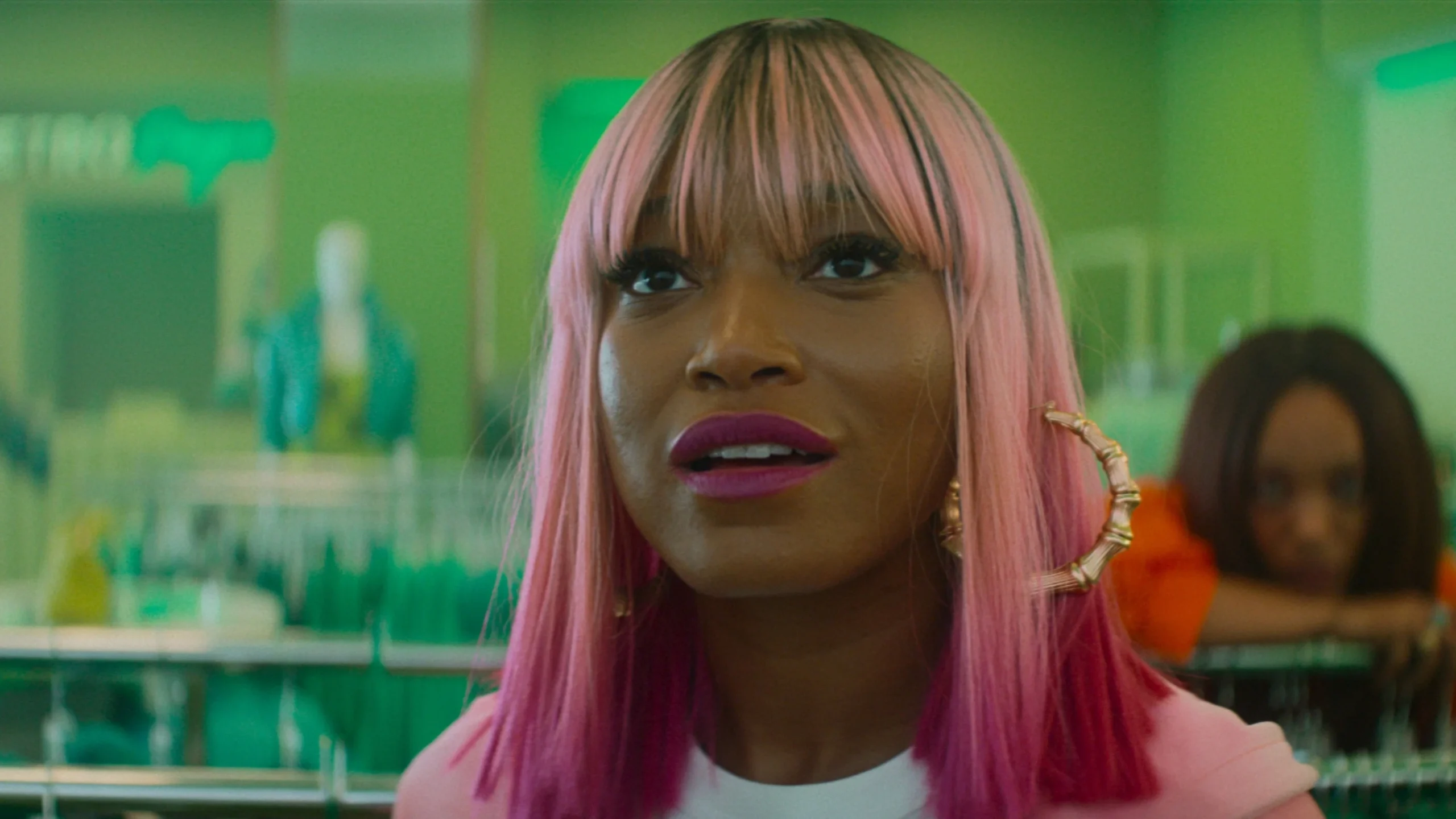
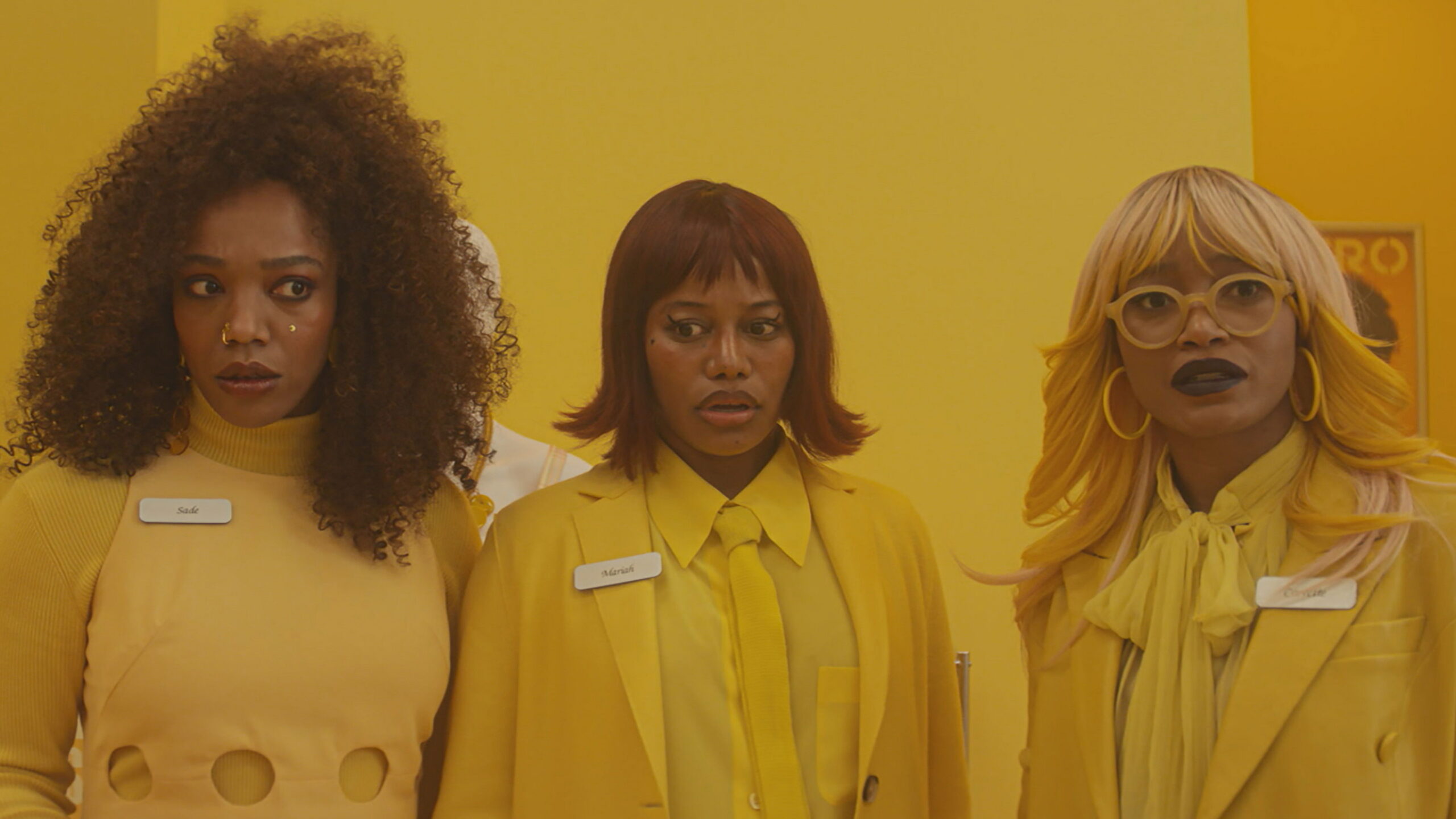
The entire breadth and depth of the frame places these ideas and characters within a bold and colourful world, where Riley deploys colour to fascinating and eye-burning effect. Metro stores rotate through a different monochromatic choice, where individuals stand out or blend in quite distinctly: the brown of unionised workers against the corporate-mandated vibrant monochrome; the saturated turquoise of Corvette’s clothing against the austere off-white of a high-end outlet. This is all a slightly simplistic way to represent the development of collective worker bargaining and standing up for individual rights, but the lack of nuance is made up for with the confidence of the creative team’s vision. Indeed, one of the most engaging and cathartic lines the film states repeatedly in dialogue is “this is not the time for nuance”.
That line encapsulates a lot of what makes I LOVE BOOSTERS such an invigorating viewing experience. The film actively acknowledges ‘nuance’, but rejects it in favour of direct and immediate action. Corvette admires, even idolises, Christie’s design “genius”, yet decries the system which Christie inhabits and exploits. A film replete with literal colour refuses to trade in thematic black and white; clean visual lines bring clarity to issues that don’t have such apparent contrast. Corvette and her fellow boosters take part in and appreciate things that this palette-busting capitalist world delivers to them, but despair at the human cost of that delivery, exemplified in the role of Jianhu (Poppy Liu) and her fellow Chinese factory workers.
I LOVE BOOSTERS is a disorienting rip through numerous ideas, and many of them flash by without the time to languish in their more profound qualities. However, if the years in between this film and 2018’s SORRY TO BOTHER YOU have shown anything, it’s that we have to drink from the fire hose and do our best to take action now. Now is not the time for nuance.