
BACKROOMS is an effective transition to cinema for Kane Parsons, the creator of the web series of the same name based on a viral creepypasta. The film brings together enough from its creator’s short-form work and other influences to make something engaging and disquieting. While the production design and approach keep tension high and attention locked, attempts to flesh out BACKROOMS feel stretched nevertheless.
Chiwetel Ejiofor plays Clark, a somewhat pitiful failed architect, separated from his wife, who runs a large but sparse furniture store while harbouring many chips on his shoulder about his position in life. His therapist, Mary (Renate Reinsve), listens dutifully to his grievances, in between ruminating on her own past with her troubled and abusive mother and pushing shonky self-help tapes. One evening, Clark stumbles into some sort of extradimensional space – the Backrooms – via the store’s basement. Endless, sprawling, and off-kilter, they offer a new frontier as much as they do creepy uncertainty and danger.
“Everything about the film’s settings, including those in the supposed real world, evoke a feeling of something being broken, unfulfilled promise, or deep-set trauma.”
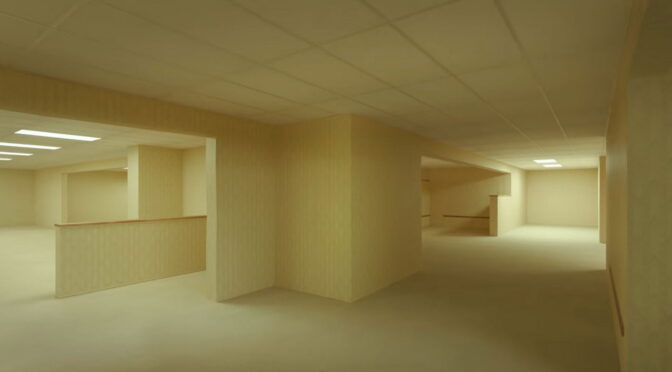
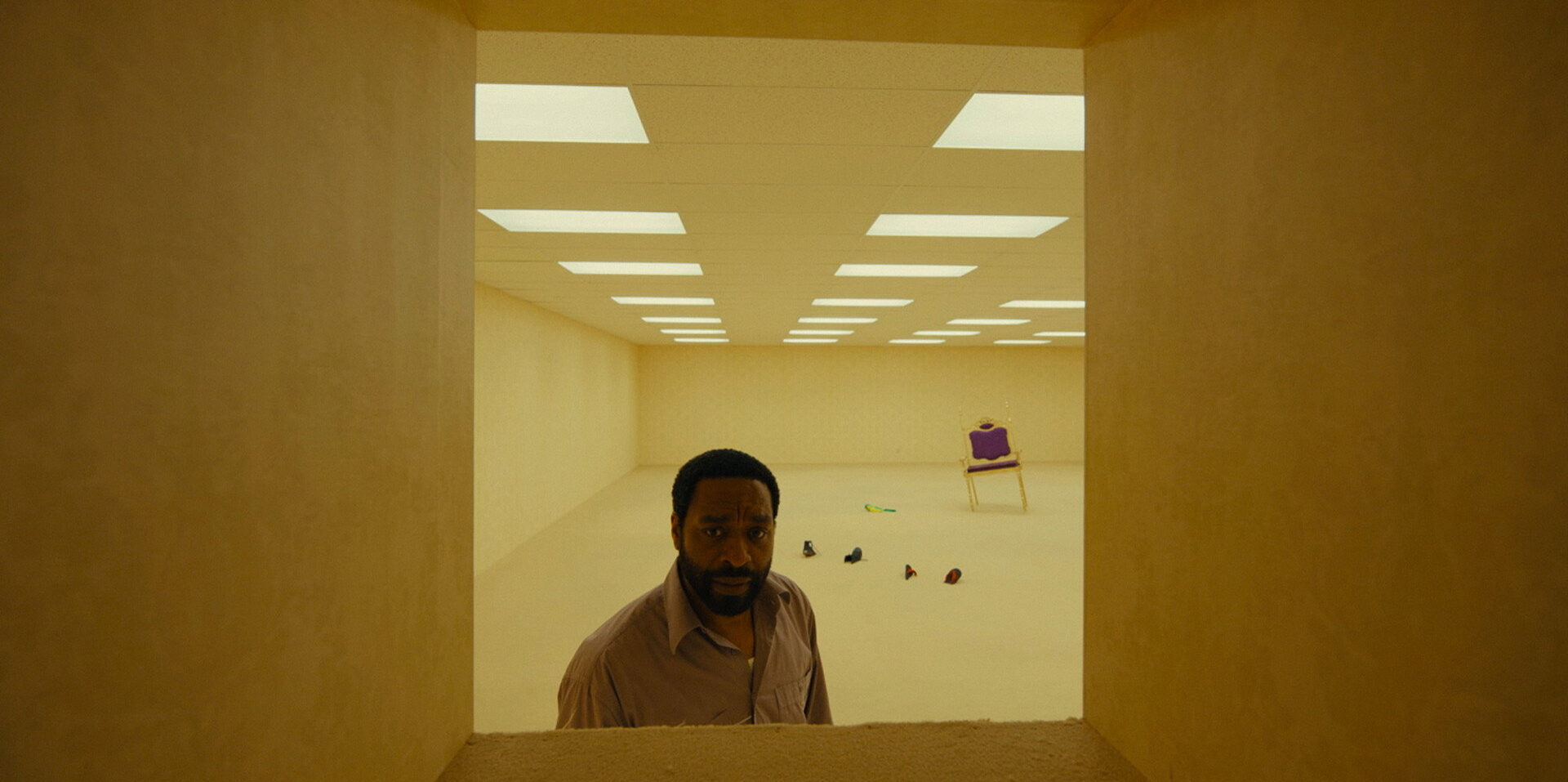
The production design of the film is the most valuable element of the atmosphere it looks to develop. The web series Parsons created, and the original 4chan post from which it originated, is probably the most famous example of the ‘liminal spaces’ trend in online media. The transition from an effects-built space to a physical one with digital embellishment reaps rewards. The uncanny feeling created in BACKROOMS is palpable, with the lighting in the weird spaces creating the unpleasant feeling of being in a space with no windows and old furnishing. The geometry is both intrinsically odd – half walls and skirting in odd places, peculiar slanted corridors and ramps – and embellished with off-putting additions such as piles of furniture, road signs, and disturbing clutter.
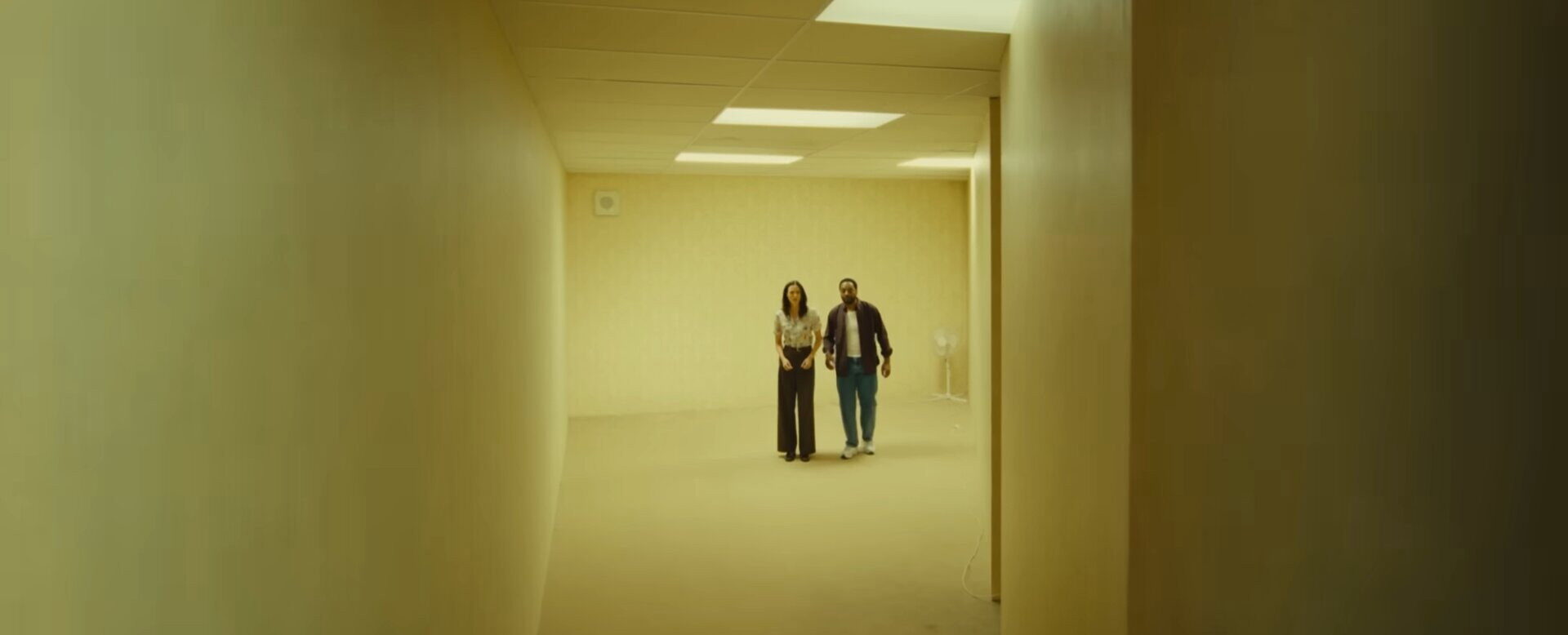
One of the most striking elements is the slightly ‘broken’ versions of reality present in BACKROOMS. Things will be partially embedded in the wall or floor, almost appearing as if they are glitched like in a video game: present and rendered but not fully within the space. Where forerunners like THE SHINING relied on impossible geometry to create subtle eeriness (as well as some modern liminal space stablemates, such as EXIT 8), BACKROOMS instead makes a physically consistent space that is logically absurd and ‘off’. The film’s aesthetics and characters actively explore the idea that they have found a distorted, misremembered version of reality. This notion gives BACKROOMS its most interesting ideas to build out from the look and feel of the film. Everything about the film’s settings, including those in the supposed real world, evoke a feeling of something being broken, unfulfilled promise, or deep-set trauma.
Clark roleplays the night his wife kicked him out from his home (one he is at pains to point out he still pays for) with Mary. Much like the Backrooms, it’s a distorted memory; partly the promise of a different path or role, and partly a painful and scary facsimile of the real experience. Mary’s remembrances of her mother fill a similar space in the film’s themes. Both are revisited in the Backrooms to evocative effect near the film’s climax. In some ways, the Backrooms is the confused mindscape in which these memories are weaponised: you can either explore and break free from them, or become trapped, forever meandering in the tepid, fluorescent lighting of your own despair.
“The additional world-building beats that BACKROOMS offers feel less sure-footed. [There] are clear signs BACKROOMS has made choices to stretch itself narratively when its strengths are technical and atmospheric.”
The additional world-building beats that BACKROOMS offers feel less sure-footed. A small role for Mark Duplass is drip-fed into the narrative mysteriously, and doesn’t amount to much beyond franchise potential and a reference back to lore from the (in-continuity) web series. If anything, it undercuts the film’s attempts to focus on the characters. Mary and Clark’s personal histories lack the detail and focus to deepen the characters, and although this leaves plenty of breathing space for ambiguity – in which the film thrives – these are clear signs BACKROOMS has made choices to stretch itself narratively when its strengths are technical and atmospheric.
As effective as the spaces created in BACKROOMS are, the film relies too heavily on the found footage style of the series and some horror influences (V/H/S, THE BLAIR WITCH PROJECT, PARANORMAL ACTIVITY). This has some clear thematic echoes, looping back to a forgotten 1990s and early 2000s of now rotten promise, but the film adaptation is at its best when emphasising the space and people within with wide-angle photography and smooth transitions. The combination of Parsons’ overall vision with Jeremy Cox’s cinematography and Greg Ng’s editing makes the concept’s leap to the big screen – and, more importantly, that of the underlying ideas – so effective, it feels odd to fall back on lo-fi restrictions so frequently, such as in Clark’s expedition with an unsuspecting employee. The tendency to do so feels like one of comfort rather than discomfiting.
BACKROOMS is an eerily realised creative vision, but it’s difficult to escape the idea that it takes a suboptimal turn away from the technical strengths that give this adaptation such a firm footing. That being said, in evoking a feeling of being lost in a rotting and unwelcoming space full of uncertainty, perhaps that reach for meaning represents this era of history perfectly.