
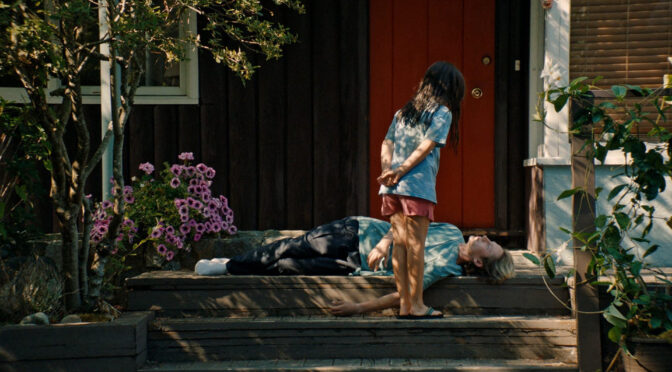
BLUE HERON is a superb debut feature that plays with perspective, memory, and childhood to tell an affecting family story. Director Sophy Romvari’s feature draws upon her own childhood, but the fascinating interplay of recollection and emotional truth creates something with remarkable broad resonance.
The film largely plays out from the perspective of Sasha (Eylul Guven), who observes her Hungarian parents (Iringó Réti, Ádám Tompa) navigating a new life on Vancouver Island alongside the mental health challenges faced by her brother, Jeremy (Erik Beddoes). However, the film is not a straightforward drama of this period of Sasha’s life. We also see Sasha as an adult filmmaker (Amy Zimmer) reflecting on this part of her childhood, before building to an evocative and dreamlike interaction between those periods.
BLUE HERON begins as a skilfully crafted story of young Sasha’s family life, but turns into something more unusual and experiential. The film patiently sets up a cinematic manifestation of the near-universal experience of attempting to understand your childhood with adult knowledge. Romvari takes the beautiful tableau that she and her creative team constructed, and uses it to portray the process of adult realisation and interpretation of imperfect childhood memories. It’s a remarkably deftly handled turn of narrative. Sasha’s understanding of her parents has some echoes of ALL OF US STRANGERS, and an even stronger echo of Celine Sciamma’s PETITE MAMAN or Charlotte Wells’ AFTERSUN. However, the way BLUE HERON manifests a complex and personal mental process – recontextualising flawed memory as an adult – carries a deep emotional resonance that places it alongside the intimate epiphanies realised in those films.
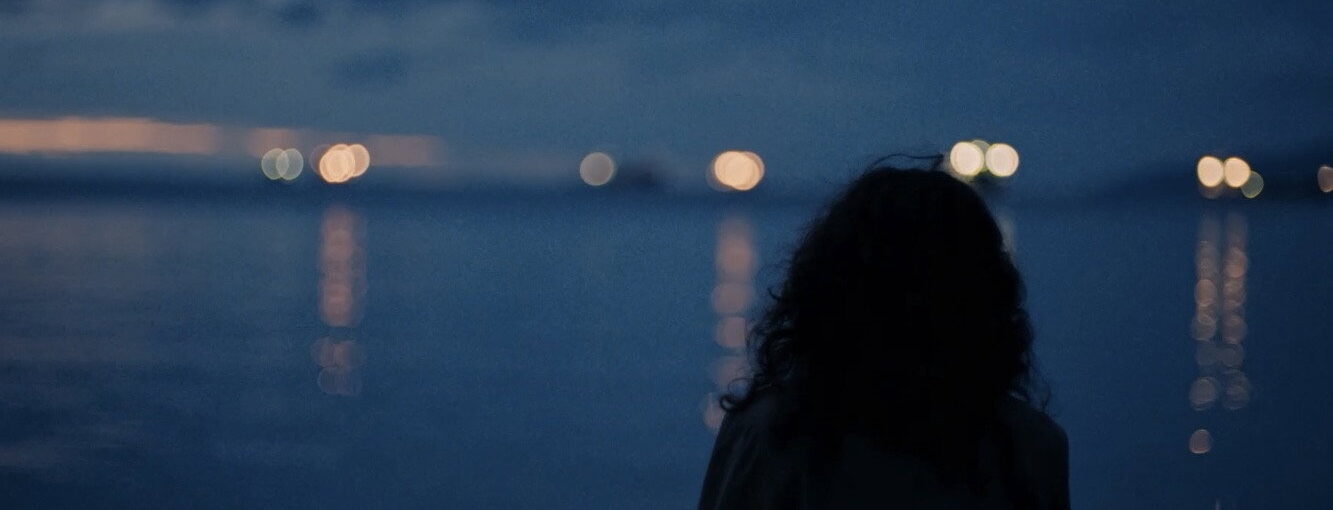
“BLUE HERON begins as a skilfully crafted story of young Sasha’s family life, but turns into something more unusual and experiential.”
Romvari captures the awkward moments of parenthood and childhood beautifully, where truth clashes against feeling secure and loved. The parents’ desire to address The Thing Which Is Going On, while also trying to keep some semblance of routine and happiness, is palpable. Trips to the beach turn into stressful ordeals. A quiet afternoon at home rapidly develops a sense of danger. A teenager acting out becomes a low-key neighbourhood spectacle. Small flickers of Jeremy’s behaviour also capture a feeling of hypervigilance that bookends tender moments with his siblings.
Around the edges of all this is Sasha; taking in everything that is happening, not fully understanding, and perhaps not internalising an objective truth of events, which becomes important for her adult self. The film’s aesthetic is almost archival and age-bleached; it has the feeling of a memory, but one which has been edited or lacks metaphorical ‘B-roll’. Sasha’s perception here is a truth, but perhaps not the whole – probably unknowable – truth.
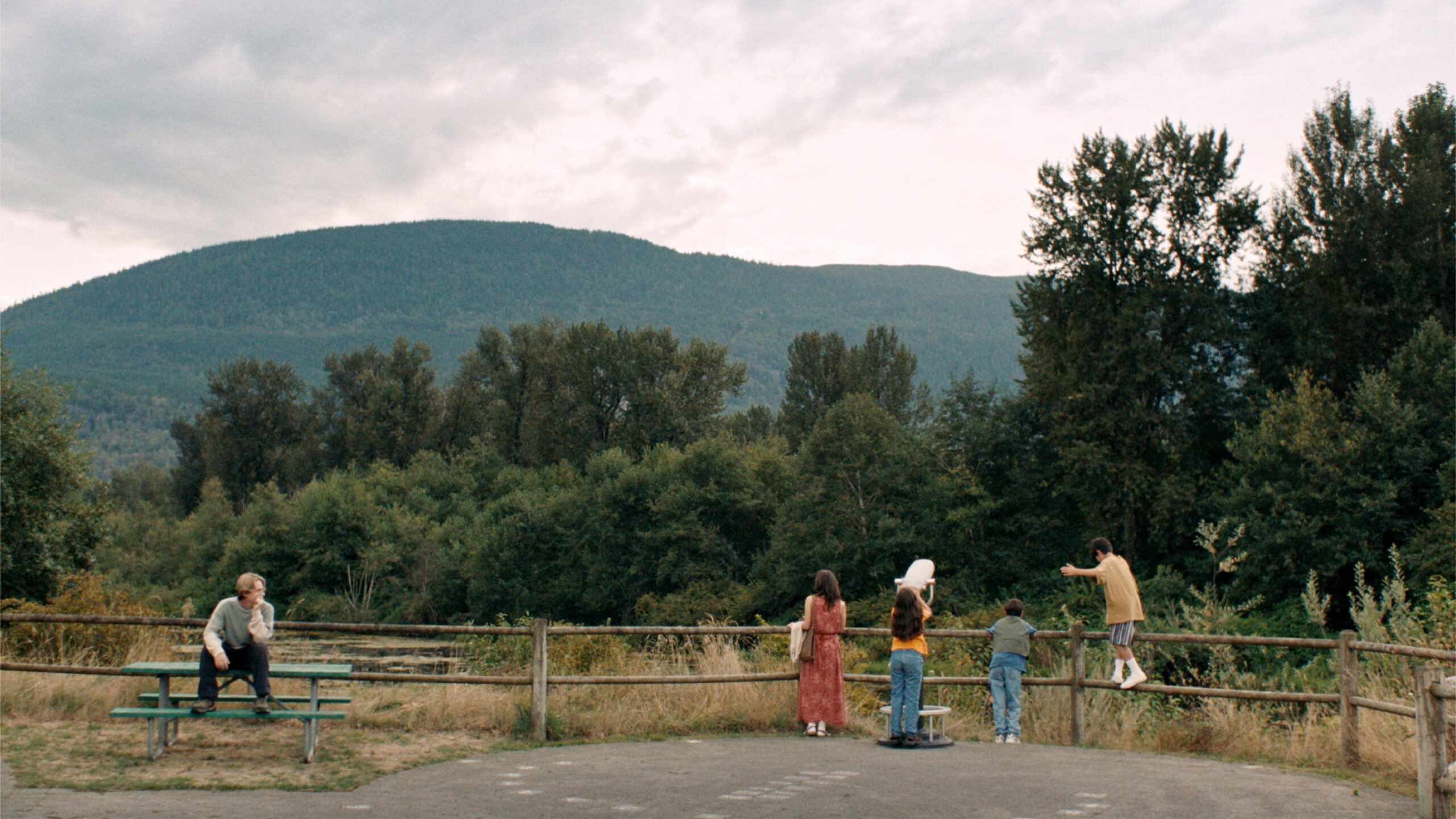
“BLUE HERON is a gentle demonstration of cinema’s power, showcasing the ability of the medium and Romvari to bring tangible, shared experience of a subjective process difficult to put into words.”
Romvari frequently lets shots linger, allowing the memories to develop in the audience as well as Sasha. Between character moments, the film also often uses establishing shots to pull back and expand the view on the scenery of Vancouver Island; the family are the most significant thing in the frame, but small and isolated nonetheless. The film also gives space to the interior disquiet Jeremy experiences, and fills in Sasha’s observations with interactions between the parents. These interpretations of the family’s life play as straightforward character moments, but come to inform the film’s latter stages.
BLUE HERON is a gentle demonstration of cinema’s power, showcasing the ability of the medium and Romvari to bring tangible, shared experience of a subjective process difficult to put into words. The film is one constructed of fuzzy memories and resultant half-truths, but the impression it leaves is firm and enduring.
Couldn’t agree more, expresses what is great about this movie